
Outrigger canoe paddling on the Big Island: how to join a club
Canoe clubs on Hawaii Island are volunteer organizations, not classes you buy. What the websites leave out about the season, the novice crew and walking in.
By YKnot Admin · · 7 min read
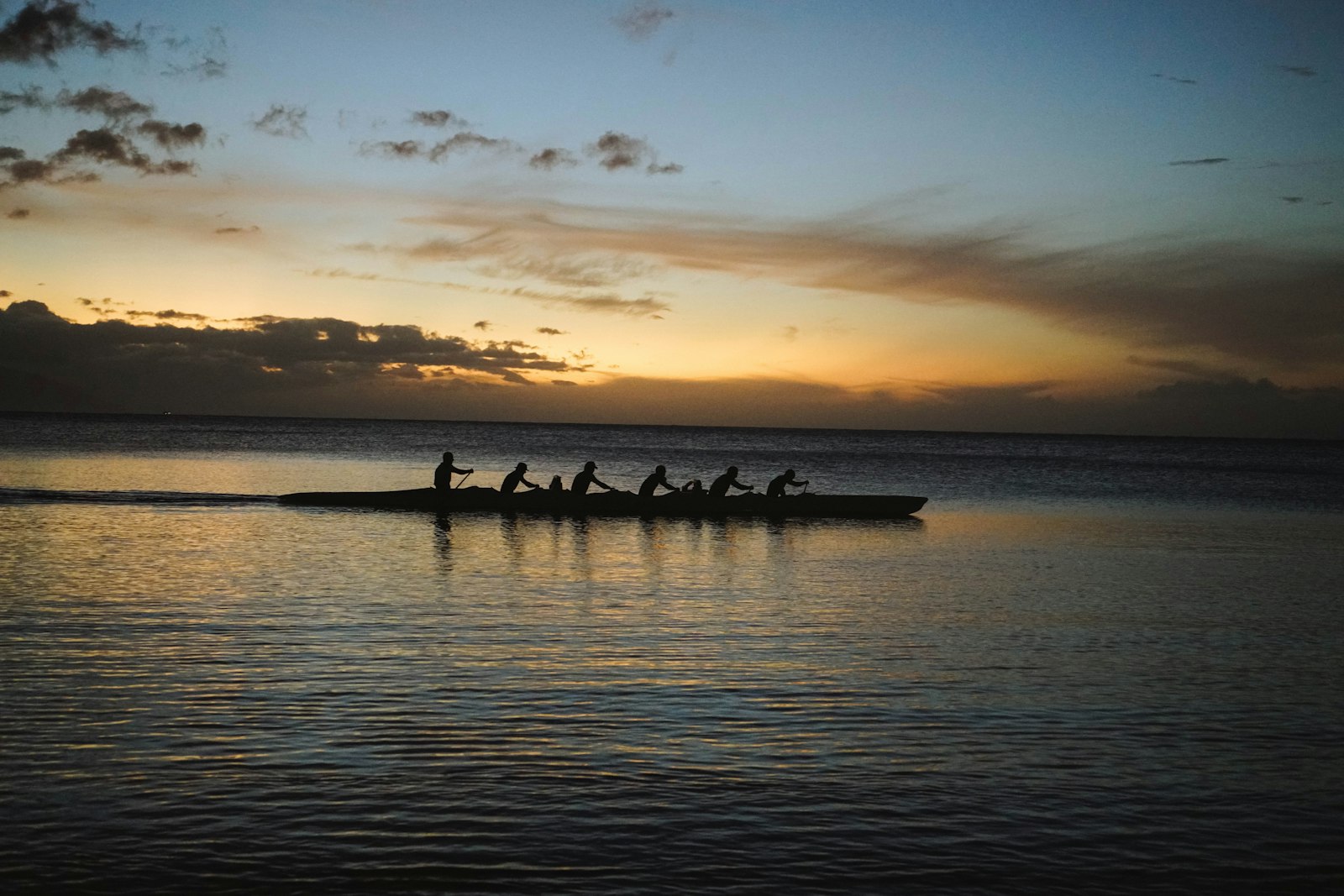
You already know the clubs exist. You have driven past the hālau at Hilo Bayfront in the dark and seen headlamps moving around the racks. You have been at Kailua Pier early enough to watch six people carry a canoe down and disappear north before the traffic starts.
So the thing stopping you is not information. The thing stopping you is that nobody has told you you are allowed to walk up.
That gap is nobody's fault. Club websites are written for people who already know what a canoe club is — that Novice B is a division, that a regatta eats an entire Saturday, that the season starts long before the racing does. If you are new to the island, or new to the water, or you left a crew behind on Oʻahu, you are reading those pages for a sentence that says beginners welcome, here is the door. It is usually not there, because to the people who wrote it the door is obvious.
Here is what those pages leave out.
A canoe club is a community organization, not a service you buy
Understand this before you contact anyone. A canoe club on this island is closer to a volunteer fire department than to a gym. There is no front desk. The coach has a job. The person who answers the club's email answers it at night, from a phone, after work. Dues go toward canoes, trailers, insurance and the association, not toward staffing something for your convenience. Nobody is being paid to be glad you showed up, which is exactly why it counts when they are.
The physical center of it is the hālau — the canoe house. Clubs maintain their own: Puna Canoe Club at Bayfront in Hilo, Keaukaha Canoe Club out in Keaukaha, Keoua at Hōnaunau Bay. Hālau workdays are part of the calendar: rigging gets checked, hulls get patched, the yard gets cleared, and the people who turn up for that are the people who get known.
That is the part a newcomer can use immediately. You do not have to be fast to be useful — showing up for a workday, helping load a trailer, volunteering at a race, puts you inside the organization faster than a season of quietly attending practice.
It also means the culture is not decorative. Keoua ties its purpose to the cultural legacy of Hōnaunau and the protection of that bay; Keaukaha was started by kūpuna for the youth of that community. You are being invited into something with lineage and protocol. Go to ask, listen more than you talk, and do not treat a canoe as equipment.
Where the clubs actually are
Hawaiʻi Island's clubs race under Moku O Hawaiʻi, the island's own association, which sits under the statewide body. Different shorelines, genuinely different feel.
Kona side
Kai ʻOpua is the Kailua Bay club, and the one most newcomers land on. It carries racing crews and a separate recreational program that goes out at sunrise — the softest entry point on the island for an adult who mostly wants to be on the water with people. Keauhou Canoe Club works out of Keauhou Bay just south of town, with a recreational side built around technique and safety rather than a racing calendar. Further down the coast, Keoua at Hōnaunau.
Hilo and Puna
Kamehameha Canoe Club and Puna Canoe Club both operate off Hilo Bay — Hilo One — with Keaukaha along the same shore. If you live in Puna, note that the Puna club paddles out of Hilo; the drive in is part of the deal, and everyone else on that crew is making it too.
Kohala and Waikoloa
Kawaihae Canoe Club is the one up there, working off Kawaihae Harbor — the flattest, driest water on the island most mornings, and worth the drive down Kawaihae Road from Waimea in the dark. If you are in Waimea or Waikoloa Village and assumed there was nothing on your side, that is the name.
The water is not the same product on each side. Kona is usually flat at dawn and windy by mid-morning; Hilo Bay is protected, rains on you, and does not care. If you have not settled on a coast yet, that argument is its own post.
The season has a shape, and there is a door in it
The paddling year is not one long block. Recruiting and novice training start well before any racing, late winter into spring depending on the club. Sprint racing in six-person canoes comes next, through the warm months, and a regatta is not an hour of your Saturday — it is the whole Saturday, for a run of weekends. Long-distance racing weights the back half of the year, and the island's largest event — the Queen Liliʻuokalani race out of Kailua Bay, long described as the largest long-distance canoe race anywhere — turns the Kona coast into something you can feel from the highway. That calendar is broadly the same statewide, so if you paddled on Oʻahu it will look familiar. The clubs and the water will not.
The door is the novice crew, and the reason it works is that everyone in it is as new as you are.
Novice divisions exist because the sport formalized the assumption that beginners arrive every year. A first-year paddler is not an inconvenience to be tolerated; the season is built around producing them. You will be in a canoe with other adults who also cannot read water, also have to be told which side to switch to. Nobody is watching you. They are counting.
Two hard requirements, and every club will want both before you race. You must be able to swim, properly, in open water. And you will do a water-safety check that includes a huli drill — deliberately flipping the canoe and putting it back upright with your crew. That drill is the best thing that will happen to you in the first month. It converts the fear of tipping over into a procedure.
Walking in cold at the hālau
Contact before the recruiting window if you can, and if you have missed it, contact anyway — there is always somebody who quit, moved, or got hurt, and the crew needs bodies.
Say the three things that actually help: where you live, that you can swim, and that you have never paddled. That last one is not a confession. It routes you correctly.
Then know what you are walking into. At Bayfront the yard is working before the light comes over the bay — headlamps, a hose running, hulls upside down on the racks and somebody already rigging. On the Kona side the recreational crews are off the pier at first light and back in before the traffic thickens on Aliʻi Drive — the whole reason a working adult can do this at all.
Come in something you can swim in, bring water, and leave anything you care about in the truck; there is nowhere to put a bag. Then ask before you put a hand on a canoe. Carrying is done on a call, six people moving as one, and a stray hand at the wrong moment is how a hull gets dropped. Wait to be told where you are lifting.
Call the coach coach, and anyone appreciably older than you uncle or auntie until told otherwise — not a performance, just how people are addressed here. And do not skip the unglamorous week after a rough practice: the people who stay through it are, functionally, the club.
Go in with the right expectation. This is not an activity you attend. It is a crew of six who notice when a seat is empty, a coach who will correct you in front of everyone, and a slow accumulation of people who will eventually text you about something unrelated. On an island where a social circle is otherwise slow to form — on the west side and in Hilo both — that is the most reliable structure there is.
If your schedule is not up for a five-day-a-week commitment yet, the water is still there. Start with one other person on an ordinary morning and build to the club.
YKnot is built for exactly that gap: people here post plans they're already going to — a hike, a dinner, a paddle — with a spare seat, and you ask to join. It's members-only and everyone's ID-verified, so you know who you're connecting with.
See what's happening in Hawaii →
Cover photo by Corentin Largeron on Unsplash.