
Pickup sports on Maui: where adult open gym actually happens
Adult open gym on Maui runs in county community centers most weeknights, and almost nobody outside the regulars knows where. Here's how to get in.
By YKnot Admin · · 7 min read
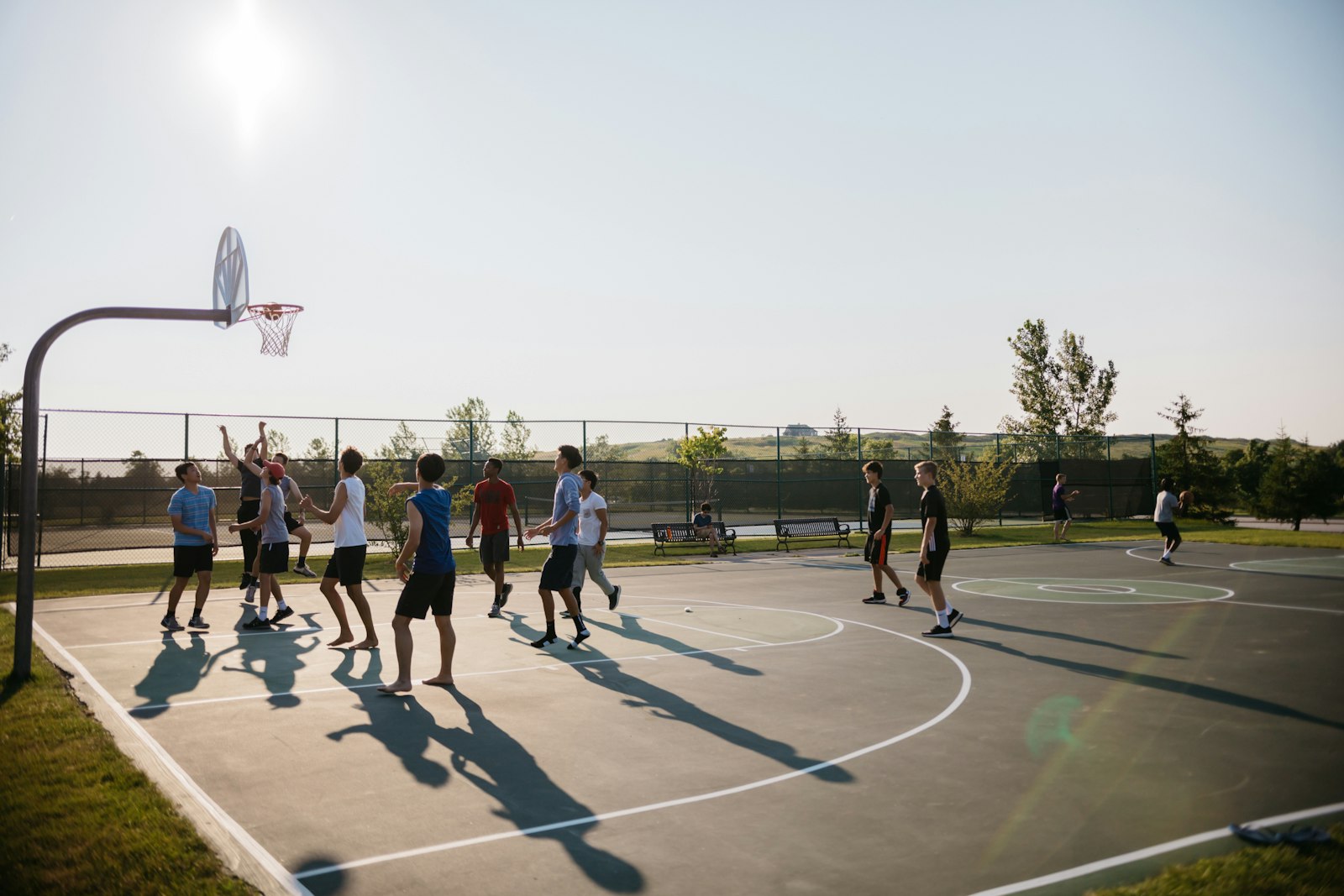
There is a whole social layer on this island that runs three nights a week in a county gym, costs nothing or close to it, and is essentially invisible unless someone brings you.
It is not hidden on purpose. It is just that the information lives in a county PDF, on a flyer taped inside a rec center door, and in the heads of about forty people who have been playing together since before you moved here. If you played something in high school or college and then stopped when you got here, that is the gap. Maui has open gym. It has a lot of it. It has no front door.
Where adult open play actually happens on Maui
The gyms worth knowing are all county facilities, run out of the Department of Parks and Recreation, and they cluster where the population does.
Central Maui
The War Memorial complex in Wailuku is the largest indoor floor on the island — gym, stadium and pool on one site off Kaʻahumanu Avenue — and it is also the one most often swallowed by high-school tournaments in season, which matters more than it sounds. The Velma McWayne Santos Community Center, also in Wailuku, is smaller and quieter. Kahului Community Center sits over near Keōpūolani Park and pulls the Kahului working crowd.
South Maui
Kīhei Community Center on Lipoa Street is the indoor option most south Maui residents can reach without driving to Wailuku, which is exactly why it fills.
Upcountry
Hannibal Tavares Community Center in Pukalani and Eddie Tam Memorial Center in Makawao are the two upcountry centers, and upcountry evenings are cool enough that nobody is fighting the room temperature.
West
West Maui's indoor recreation picture has changed and is still changing. If you live on that side, ask the county what is running rather than working from an old schedule.
Most centers run some version of a weeknight rotation — a volleyball night, a basketball night, often a pickleball block sharing the same floor — and that rotation is set season by season and revised by the county more than once a year. Which is why this post will not print a grid. The grid is wrong within months. The structure isn't.
So: pick the center closest to where you sleep, call it or walk in during office hours, and ask two questions — which nights are adult open play, and whether you need to sign anything. That five-minute phone call is the entire barrier, and it is the reason most people never go.
Why the indoor floor matters more on Maui than it sounds
On a lot of islands you would just play outside. Here the wind decides.
Central Maui is an isthmus, and the trade winds funnel across it all afternoon. Kahului in the late afternoon is not a volleyball environment — it is a place where a ball does what the wind says. Kīhei bakes until the sea breeze turns up. Which is why a covered court in this county is not a luxury, it is the only surface where a set stays a set after four o'clock.
Outdoor play still exists, and it is worth knowing: Kalama Park in Kīhei has courts and sand and the best late-afternoon crowd in south Maui, Keōpūolani Regional Park in Kahului is where the field sports sprawl, and Wells Park in Wailuku is the after-work basketball option near town. But those are weather-dependent and daylight-dependent. The gyms are the reliable version, and reliability is the whole point — a thing that repeats every Tuesday builds something that a perfect one-off Saturday never will.
The schedule problem nobody mentions: half of Maui works nights
If you pour drinks in Wailea or work a line in Kīhei or close a hotel restaurant in Kāʻanapali, a gym that runs six to nine on a weeknight is useless to you. You are on shift for every minute of it.
This is not a small group. Between the resorts, the restaurants, the tour operators and the hospital, a large share of working-age Maui is unavailable exactly when organised recreation happens, and then free on a Tuesday morning when the gym is running a keiki program.
Two honest workarounds. First, the daytime outdoor courts are yours — Kalama at ten in the morning on your day off is a genuinely different and much friendlier scene than Kalama at five. Second, say your schedule out loud to the people you play with. "I'm off Tuesdays and Wednesdays" is the most useful sentence a service-industry person on this island can hand another one, because everyone in that job is hunting for the same thing and none of them can find it on a weekend calendar. It is the same problem people run into making friends in Kīhei generally: the hours are the obstacle, not the willingness.
Open gym is social roulette, and that is its actual limit
Here is the part the county schedule cannot fix.
You show up, and the first thing to understand is that the sideline is the booking system. Whoever arrived early has laid something down — a shirt, a water bottle, a pair of slippers — to hold a place in line, winners hold the floor, and the next squad gets called by whoever is running that line. Nobody will explain this to you. If you came alone you get folded in with three strangers for eleven minutes, and you learn something real about all of them — how they call a ball, whether they pass to the person who is open or the person who is loud. Then the game ends, the rotation rolls, and you never play with any of them again.
The other thing that catches transplants off guard here is who the regulars are. In a county gym on Maui a large share of the floor is related to each other: an uncle, his cousin, two nephews, and somebody's daughter who is better than all of them. That is not a closed door — those groups are usually the easiest rooms to get absorbed into, because at some point an auntie decides you are fine and that is the entire vetting process. But the social unit was formed long before you walked in. You are joining a family's Tuesday, not a club's.
Open play is unusually good at producing the feeling of connection and unusually bad at producing the thing itself. Three good games is not a friendship. It is a highlight reel with no second episode, because the format has no step where anybody says what happens next.
Closing that loop is a separate act, and it is nobody's job. There is no organiser, no roster, no sign-up sheet. If it is going to happen, you are the one who has to do the slightly exposed thing:
- Go early and put your own thing down on the sideline. The first fifteen minutes are when people talk; once the games start, nobody does.
- Learn two names, ask which night is theirs, and come back on that night. Regulars here are regular by night, not by gym — the Tuesday crowd and the Thursday crowd at the same center can be two different sets of people.
- Be the one who suggests the thing outside the gym, with a time in it. After War Memorial or Velma Santos, Wailuku town is three minutes away and half the floor is headed there anyway; after Kīhei Community Center, the Azeka side of the highway is the default stop heading south.
- Come back a third time. The second visit gets you recognised. The third gets you counted.
None of that is charming. It is just the mechanism, and it works the same way pickup sports on Oʻahu works and the same way finding a hiking partner on Maui works. The activity is easy to find. The specific human on a specific afternoon is the hard part, and it always was.
YKnot is built for exactly that gap: people here post plans they're already going to — a hike, a dinner, a paddle — with a spare seat, and you ask to join. It's members-only and everyone's ID-verified, so you know who you're connecting with.
See what's happening on Maui →
Cover photo by Steven Abraham on Unsplash.