
New in Hawaii
Making friends in Kihei and south Maui
Kihei is six miles of one road and most of working Maui lives on it. Where people actually gather, and how to meet them when your day off is Tuesday.
By YKnot Admin · · 5 min read
Kīhei is roughly six miles of one road, and a large share of working Maui lives along it — in condos built in the seventies, in walk-ups behind the highway, three to a two-bedroom, sharing a wall with someone who has been here forty years and someone who landed in March. That density is the good news. Making friends in Kihei is not a problem of proximity. You are already standing next to your people in the Foodland line. It is a problem of repetition.
Nobody here is short of neighbors. What they are short of is a reason to see the same person twice.
Making friends in Kihei happens at the beach park at sunset
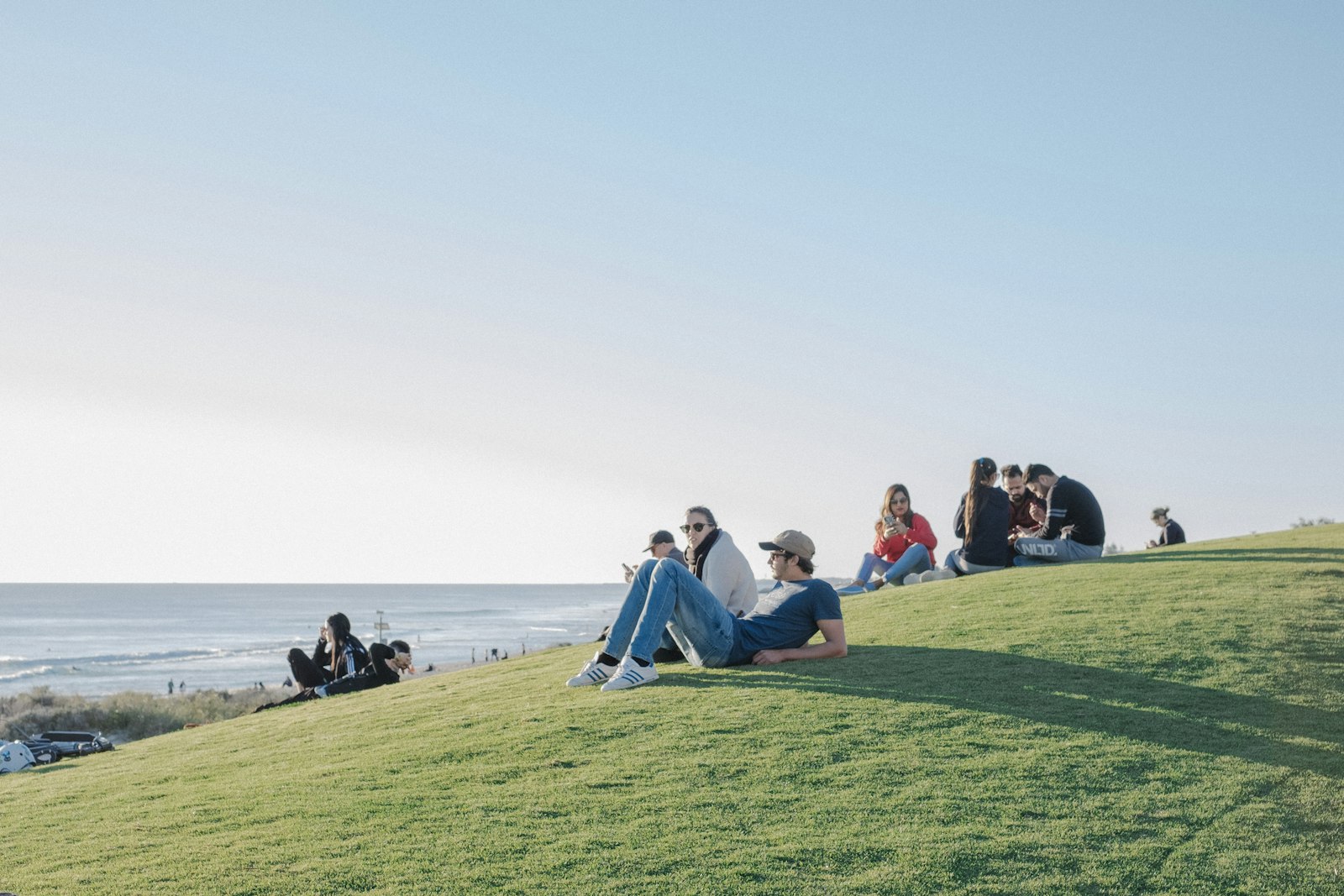
If this town has a square, it is the grass strip above the sand between about five and seven.
Go stand at Kamaʻole I, II or III near the end of the day and you are not looking at a scenic overlook, you are looking at the town's standing appointment. Somebody's coolers. A guitar. A dog nobody is watching closely. Two people doing an actual workout while four others pretend to. Volleyball that has been running for years with whoever shows up. Kalama Park does the same job earlier in the day with courts and a skate bowl instead of sand.
What makes it work socially is that it repeats. The same faces are there Tuesday and Thursday and Sunday. You do not need an opening line — you need to come back on the third day, which is the part most new arrivals skip after one polite evening of standing near strangers with a drink.
So pick one park and one rough time and become a regular at it. Bring something that gives people a reason to talk to you: a ball, a board, a second chair, a dog. Or go the other way and bring the plan yourself — say out loud that you are going down to Kam III at five and anyone is welcome. Naming a time in front of people is a small, slightly exposed thing to do, and it works more reliably than anything else in making friends on Maui.
The morning ocean crowd is the most reliable set of regulars here
The wind decides the schedule, which means everyone worth meeting is on the same one.
South shore mornings are glassy and the afternoon trade wind reliably chops it up, so the water people here are early people. Canoe clubs are off the sand before sunrise. The snorkel regulars are in at Ulua and Mākena Landing before the parking lots turn over. The learn-to-surf crowd is at the Cove in Kīhei, a small mushy wave that has been teaching beginners for decades and where you will look no worse than anyone else.
That is unusually good for meeting people, because a 6 a.m. group is self-selecting. Anybody showing up at that hour is committed and already used to seeing the same handful of faces. Introduce yourself twice and you are in.
Two honest notes. Winter brings real south swell days when the shore break at Kam III is heavier than it looks, so read the water before you walk in. And after heavy rain, runoff from the gulches puts brown water along this coast — the state health department's Clean Water Branch is where advisories and monitoring results are posted, and locals sit those days out.
Half of south Maui works nights, which changes what "free" means
If your days off are Tuesday and Wednesday, the standard advice about weekends is useless to you.
A serious share of this side works restaurants in Kīhei or resorts in Wailea, plus hotel shifts, tour boats out of Māʻalaea, and trades that start at six. Their weekend is midweek and their evenings are gone. Meanwhile the other half commutes over to Kahului and Wailuku, works nine to five, and is free exactly when the first group is not.
The practical move is to stop protecting Saturday and start using your actual free hours. Midweek mornings are the best social hours on this island and almost nobody uses them deliberately. A Tuesday at nine at a farmers market is a different crowd, less rushed and far more likely to talk. So is a Wednesday afternoon hike or a weekday paddle.
And say your schedule out loud when you meet someone. "I'm off Tuesdays and Wednesdays" is the single most useful sentence you can hand another service-industry person, because they are hunting for the same thing you are and cannot find it on a weekend calendar. If you do want the weekend version, what's on across Maui is easy enough to work from.
Being new is normal here, and saying so works better than pretending
Kīhei turns over constantly, and everyone knows it. Nobody expects you to have been here twenty years. What they notice is whether you keep showing up and whether you treat the place as somewhere you live rather than somewhere you are visiting for a long time.
One thing to be thoughtful about: a lot of people in south Maui are here because of what happened in Lahaina in August 2023, and west Maui is still rebuilding. It is a live thing in people's lives, not small talk and not an itinerary. If someone tells you about it, listen. Do not go asking.
Sharing a wall with a few thousand people you have never spoken to is its own kind of lonely. YKnot is an attempt at the missing step: a member with something already on — the Tuesday hike, the six o'clock table, the paddle before work — says how many seats are going spare, other members ask, and the host picks who comes. Everyone has been ID-verified to be there, and the exact spot arrives with the yes.
There is not much of it on Maui yet; Oʻahu has the volume today. Being early here really means being the person who posts the first Kīhei sunset and sees who turns up.