
How to get into a pickleball rotation on Kauai
Open play on Kauai is a queue, not a court list. Which road you live on, how a rotation actually works, and what to say to get into one.
By YKnot Admin · · 7 min read
Kauai is two roads out of Līhuʻe. Kūhiō Highway runs north through Wailua and Kapaʻa and ends past Hanalei. Kaumualiʻi Highway runs west through Puhi and Kalāheo and ends past Kekaha. They do not join up at the far ends. There is no belt road around this island.
That single fact governs your pickleball life more than any court does. Which of the two roads you live on decides who you end up playing with, because almost nobody crosses Līhuʻe twice a week for a game. Pick the road first, then worry about the net.
This is not a court list. Court lists are easy to find and they answer the wrong question — the question is not where the courts are, it is how you get into somebody's rotation.
Pickleball on Kauai is a two-road problem
Līhuʻe and Puhi — the hinge. Puhi sits just west of town on Kaumualiʻi, and Līhuʻe's real advantage is not its courts, it is that everybody passes through it. A south-side player and a Kapaʻa player will both drive to the middle in a way neither will drive to the other. If you work in town, this is the cluster where a lunchtime or straight-after-work habit survives.
Wailua and Kapaʻa — Kūhiō, north of town. The densest residential stretch on the island, anchored by the Bryan J. Baptiste Sports Complex in Kapaʻa. The Kapaʻa crawl sets the schedule: three miles through town in the late afternoon can take longer than the whole drive up from Līhuʻe, so sessions get timed around it rather than through it. Note too that Wailua Houselots and Wailua Homesteads are two different places — Houselots is the lower subdivision near the river, Homesteads is the upland one well above it — and people who live up in the Homesteads quietly stop driving down for anything.
The south side — Kōloa, Kalāheo, Poʻipū. Off Kaumualiʻi, down the Kōloa turnoff, with Anne Knudsen Park as the anchor. This is the side where you are most likely to find courts actually striped for pickleball rather than tennis courts the sport borrows, and it holds the island's highest concentration of retired and semi-retired transplants. That matters more than court count: the south side has real weekday daytime play, and daytime play is where someone who has just moved here gets absorbed fastest.
The west side — Hanapēpē, Waimea, Kekaha. The far end of Kaumualiʻi. Its own country: nobody from Kīlauea is driving out here and nobody out here is driving to Kīlauea, so if you live west of Hanapēpē your game is a west-side game and that is the end of it. The upside is real — the regulars stay regulars for a decade, and a newcomer who turns up three weeks running becomes one of them.
The north shore — Kīlauea, Princeville, Hanalei. The far end of Kūhiō, and the thin part. County parks up here skew toward beach parks rather than court inventory, and much of what exists is attached to a resort or a club rather than a park you can walk onto. North-shore players routinely drive down to Kapaʻa. If you moved to Princeville expecting a court down the road, this is the adjustment.
Some of these carry lights and some do not, and that one detail decides whether you play after work or only on your days off. Confirm it before you build a habit on it.
Most of it happens on tennis courts with tape on them
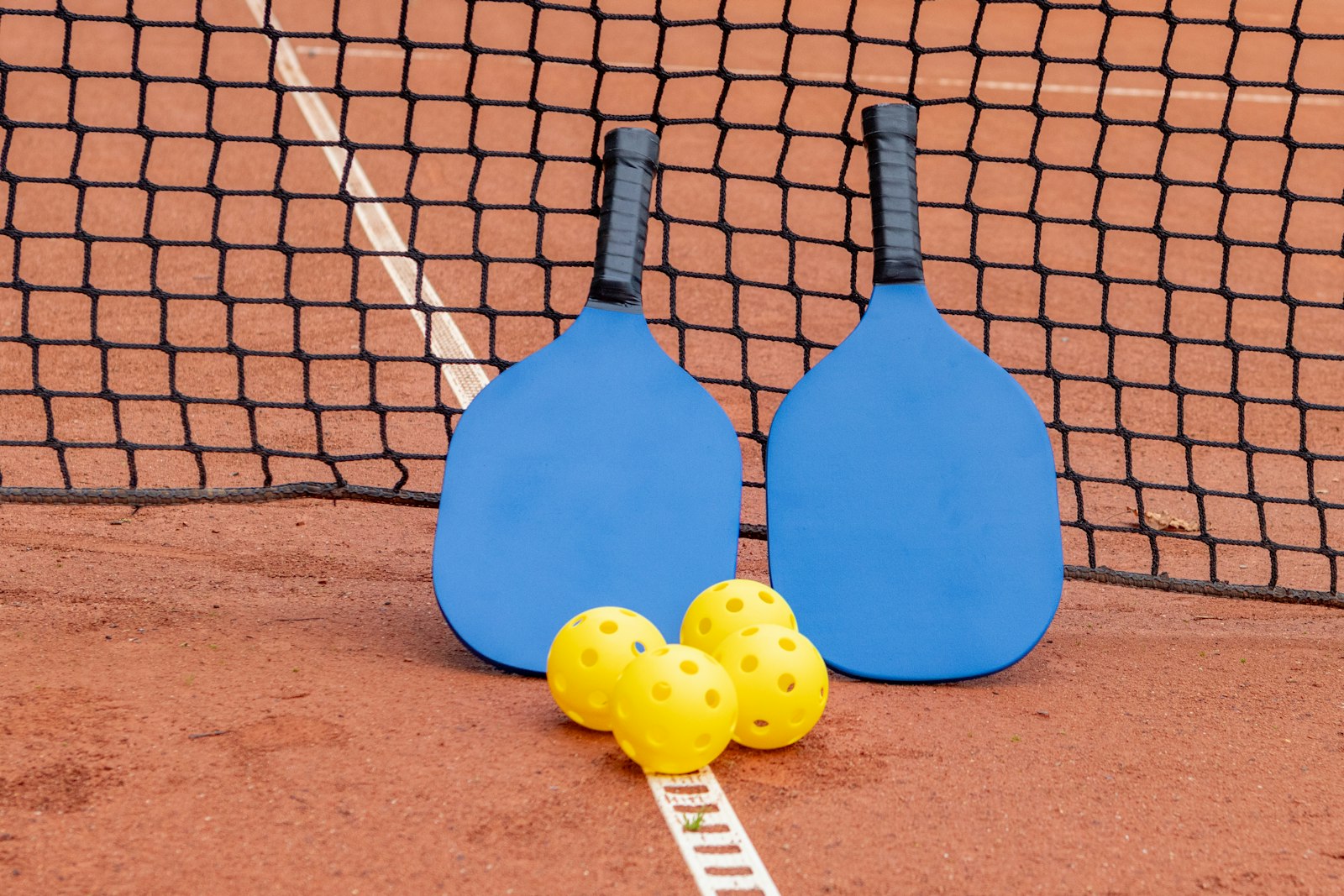
Kauai has a lot of pickleball and very few pickleball courts. Outside the south side, the sport mostly lives on county tennis courts somebody has taped or striped, with portable nets that come out of a car trunk and go back in at the end.
So the courts are shared, and access is less stable than a website makes it look. County facilities here have been closed in bulk before — parks, pools and neighborhood centers shut at once after a storm, and one at a time for resurfacing. Never build a first session around a court you have not confirmed is open: check the County of Kauaʻi Parks and Recreation listing, and better, ask someone who played there last week.
The organizing itself happens in Facebook groups and group texts, not on any official page. There is an island-wide pickleball group and several side-specific ones. Find the current one before you drive anywhere — the schedule lives there and nowhere else.
The net lives in somebody's trunk, and that somebody runs your island
The mechanics are the same as anywhere: paddles go in a rack or a line against the fence, that line is the queue, four come off and four go on, games run to eleven, win by two. You do not organize anything. You put your paddle down and wait your turn.
What is specific to Kauai is who makes it happen. On a taped tennis court the net is not the county's, it is one regular's, and it travels in the back of that person's car. On the west side that person is usually a long-timer who has run the same session on the same afternoons for years and will absorb you without ceremony. On the south side it is more often someone retired here in the last decade, running a bigger and more mixed daytime group. Up north it tends to be whoever is willing to drive. Either way, when the net's owner is off-island or laid up, the session does not happen for a fortnight — which is why the group text matters more than the court does, and why the person to find is that one regular, not a facility.
The rotation is engineered to hand you strangers. You do not have to be interesting, introduce yourself to a group, or be invited. A queue does the work small talk usually has to do — the same structural trick that makes pickleball and tennis work in Honolulu, on a much smaller island.
The hard part is the walk from the car to the fence
You can stand outside a fence with a paddle for twenty minutes and nobody will wave you in. Not because anyone is unfriendly — because the four on court are mid-game and the six waiting assume you are there for somebody else. Nobody is going to come and get you. You have to put your paddle in the stack.
The sentence that works is short, slightly humiliating, and has never once failed: "I'm new, I'm about a 2.5, put me wherever." Say your level low. Overstating it is the only real social error in this sport — a group will absorb a beginner indefinitely and cannot absorb someone who claimed 4.0 and is not.
One other thing marks you as new, and it is easy to fix: call the score before you serve, all three numbers, every time.
If you have recently retired here or gone part-time, you hold the scarcest resource in this system: free weekday daytime. That is the softest, most talkative version of the sport, and the reason the south side absorbs newcomers faster than anywhere else on the island. The thing that makes weekday time awkward socially — everyone else is at work — is an advantage on a court.
A good session turns into nothing unless somebody names the next one
You play three good games, you like two of these people — and then everybody walks to their cars and it evaporates. Eighteen months later you are still nodding at each other across a Kapaʻa parking lot and neither of you knows the other's last name.
The fix costs one sentence, said on court, before anyone reaches the parking lot. "Are you here Thursday?" Better still, something that is not pickleball. A specific day beats an open-ended "we should play again" every time, and the person who names the day is the one the group forms around.
The court hands you the strangers for free. Turning one of them into a standing Thursday is the actual work, and it is no different from the rest of building a life on Kauai. If you are connecting with someone away from a public court for the first time, the ordinary precautions still apply.
YKnot is built for exactly that gap: people here post plans they're already going to — a hike, a dinner, a paddle — with a spare seat, and you ask to join. It's members-only and everyone's ID-verified, so you know who you're connecting with.