
Living in Puna, Hawaii: cheap land, long drives, nobody next door
Puna is the one place in Hawaii where being far from people and being lonely are the same problem. An honest look at the grid, the drive, and what works.
By YKnot Admin · · 7 min read
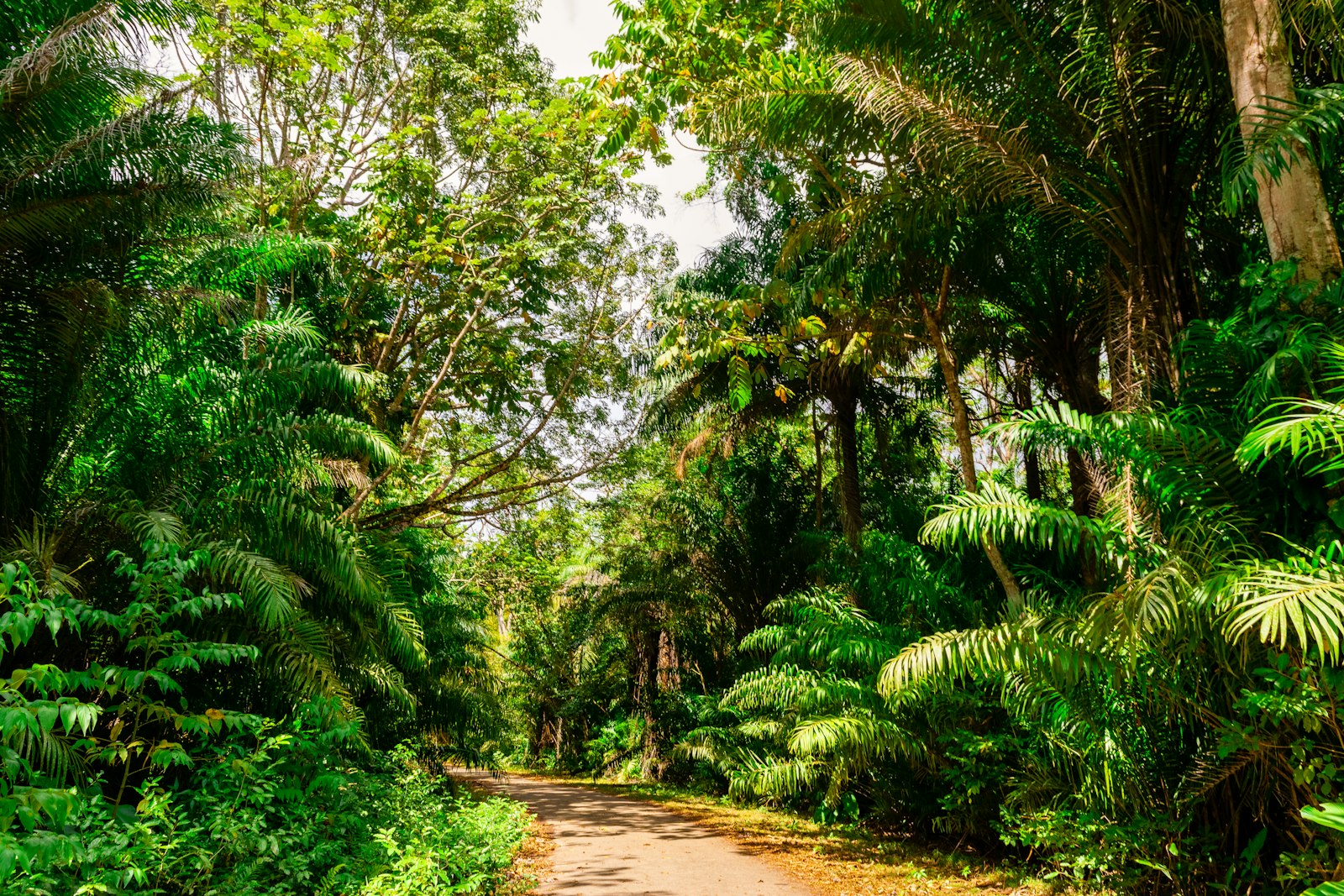
Living in Puna starts with a trade almost everybody here made knowingly. Land was out of reach everywhere else in Hawaiʻi and within reach here, so you took an acre in Hawaiian Paradise Park, Orchidland, Hawaiian Acres, Ainaloa, Nanawale or up the road from Pahoa, and you got the thing nobody else in this state gets: space.
Then you noticed the second half of the trade. Puna is the one district in Hawaiʻi where physical distance and social distance are literally the same problem. You're not lonely because people here are cold; they are famously not cold. You're lonely because there are two hundred feet of albizia and strawberry guava between your house and the next one, there's no sidewalk, no corner, and nothing in walking distance of anything.
That is a geometry problem, and geometry problems have solutions. They just aren't the ones that work in Kaimukī.
The subdivisions were drawn as a grid, not as a town
Between the late 1950s and the mid-1970s, more than fifty thousand subdivision lots were platted across Puna — enough for more people than lived on the whole island at the time. They were sold as land, not neighbourhoods: no sewer, no county water, usually no mail delivery, and graded cinder roads that in Puna rain stayed beautiful roughly as long as it took to photograph them.
What you live in is a rectangular grid of numbered avenues, one- to five-acre lots, and no centre. Hawaiian Paradise Park runs off Highway 130 on Kaloli, Makuʻu and Paradise Drive and holds more residents than plenty of towns in this state — and has no town. No plaza, no main street, no place you bump into somebody without having decided to.
Catchment tanks, septic or cesspool, solar or a generator for a real share of houses, and, in HPP, communal mail parks where people drive to a bank of boxes. The Owners Association's activity centre on Makuʻu Drive is the closest thing the subdivision has to a civic building.
Every place your neighbours actually are is a place you have to drive to, which means it's a place you have to decide to go to in advance. There is no accidental social life in Puna. None. That isn't a personal failing and it isn't fixable by being more outgoing.
Highway 130 is your entire social budget
One road serves lower Puna. Highway 130 between Keaʻau and Pahoa carries the great majority of this district in and out, and at commute hours it does not cope — the state has run morning contraflow on this stretch, which tells you how structural the problem is. A drive that is twenty minutes at ten in the morning is a different animal at five in the afternoon.
Run the arithmetic on a weeknight. Something in Hilo at 6pm costs you the drive in, the thing itself, and the drive home in the dark to a gate and a gravel driveway. Three hours for a one-hour activity. From Volcano or Seaview, add to that.
Two consequences catch new arrivals. Nothing spontaneous survives — "we should grab something" dies instantly here, because there is no "on the way". Whatever happens, happens because somebody picked a day and said a time out loud.
And a carpool seat is real currency. The most valuable thing you can offer another Puna resident isn't your company, it's the passenger seat of a vehicle already making the drive. Offer it early and specifically.
Is Pahoa a good place to live? It depends what you want from a town
If you want land and quiet and you're willing to plan, yes. If you want a town that does the social work for you, know what Pahoa is first.
It's the district's only real centre and it's small — a short historic stretch of Pahoa Village Road with wooden false fronts and a boardwalk, plus the newer Puna Kai centre out at Kahakai Boulevard, with the market, the pharmacy and a small park where community events land. That is essentially the whole walkable public realm for tens of thousands of people, and the only part of the district where you can plausibly run into someone.
The rest of the gathering points are specific, weekly, and each one is a drive:
- Makuʻu Farmers Market, off Highway 130 in HPP on Sunday mornings — a large market by any island standard, with music, and functionally Puna's town square. Do this one weekly, not once.
- SPACE in Seaview, lower Puna's community hall in practice: an open-air pavilion that hosts a school, classes and markets — the roster changes, the building does not. It serves Kalapana, Kehena, Ōpihikao and the bottom of the district.
- Herbert Shipman Park and the Keaʻau Armory — a county gym and field complex, one of the few covered options when it's pouring.
- The Cooper Center in Volcano Village, whose early Sunday market has been where that village assembles itself for decades, and the Volcano Art Center nearby, which runs classes in terms — a roster, a fixed hour, the same faces.
- Puna Canoe Club, which practices on the Hilo side, because this coast is cliff and rough entry. Even Puna's own canoe club is a commute. That's the district in one sentence.
What the 2018 eruption changed about the map
The lower East Rift Zone eruption permanently changed the geography of lower Puna. Roads, shoreline, swimming spots and parts of whole subdivisions are not where they were, and people in Leilani Estates, Kapoho and Nanawale lost their homes. Check current conditions and access for any specific place before you plan around it; the official information has been revised more than once.
One structural thing follows. A large share of these subdivisions sit in the island's highest-rated lava hazard zones, which is why the land was affordable and why insurance and financing work differently here. That's a conversation to have with professionals, not a blog.
What actually works when you live on a grid
Stop trying to be spontaneous. Chasing it is how people conclude Puna is lonely, when Puna is only far.
Pick by day of the week, not by interest. Two recurring things you can physically get to, ten times each, beats ten things once. Sunday at Makuʻu plus one weeknight anchor is a complete plan, and the anchor should be the one you can reach without crossing the district: SPACE if you're down in Seaview, the Keaʻau end of the grid if you're up in HPP, the Cooper Center if you're in Volcano. After a month at the same Makuʻu stall you're a regular, and being a regular here buys you what never gets posted anywhere — who has a truck, which neighbour is already driving in on Thursday.
Stack social onto drives you're already making. You're burning the fuel and the hour regardless; the only question is whether anyone's in the vehicle or waiting at the other end. The two seats worth having here are Pahoa-to-Hilo in the morning and the reverse at pau hana, so say which end of the 130 you leave from and when, and let people build around it.
Say a day, a time and a landmark out loud. Nobody here navigates by address — the numbered avenues and drives are exactly why "Sunday, 8am, I'll be at the market by the music" works and "somewhere in HPP" doesn't. The person who names the landmark gets a social life in Puna. The person who says "we should hang out sometime" gets nothing, and it isn't because anyone disliked them.
Look for the other recent arrivals. Puna grew faster than anywhere in the state, so a large share of your neighbours also moved here alone, recently, on purpose — same problem, same empty Saturday. The slow patience Hilo demands matters less here. This is a district of newcomers, and newcomers move fast for each other.
Just be honest about which side of the island you actually live on. Most of Puna's institutional life — the pool, the clubs, the classes, the hospital — sits in Hilo, which keeps the east-side question live even after you've bought the land, and makes making friends on Hawaii Island a question about the drive more than about you.
YKnot is built for exactly that gap: people here post plans they're already going to — a hike, a dinner, a paddle — with a spare seat, and you ask to join. It's members-only and everyone's ID-verified, so you know who you're connecting with.
Straight answer about this district: the plans on it are concentrated on Oʻahu today, which makes a Puna reader early rather than late. Nobody has claimed the first Sunday at Makuʻu yet.
See what's happening in Hawaii →
Cover photo by Kenrick Baksh on Unsplash.