
Moving to Waimea: the Big Island's third town
Waimea has four populations who share a post office and almost nothing else. A structural guide to living in Kamuela when you've just moved here for work.
By YKnot Admin · · 7 min read
Almost everything written about this island frames it as a choice between two coasts. Wet side or dry side, Hilo or Kona, pick one. That comparison is worth having, but it leaves out the place where a large share of the island's salaried newcomers actually land.
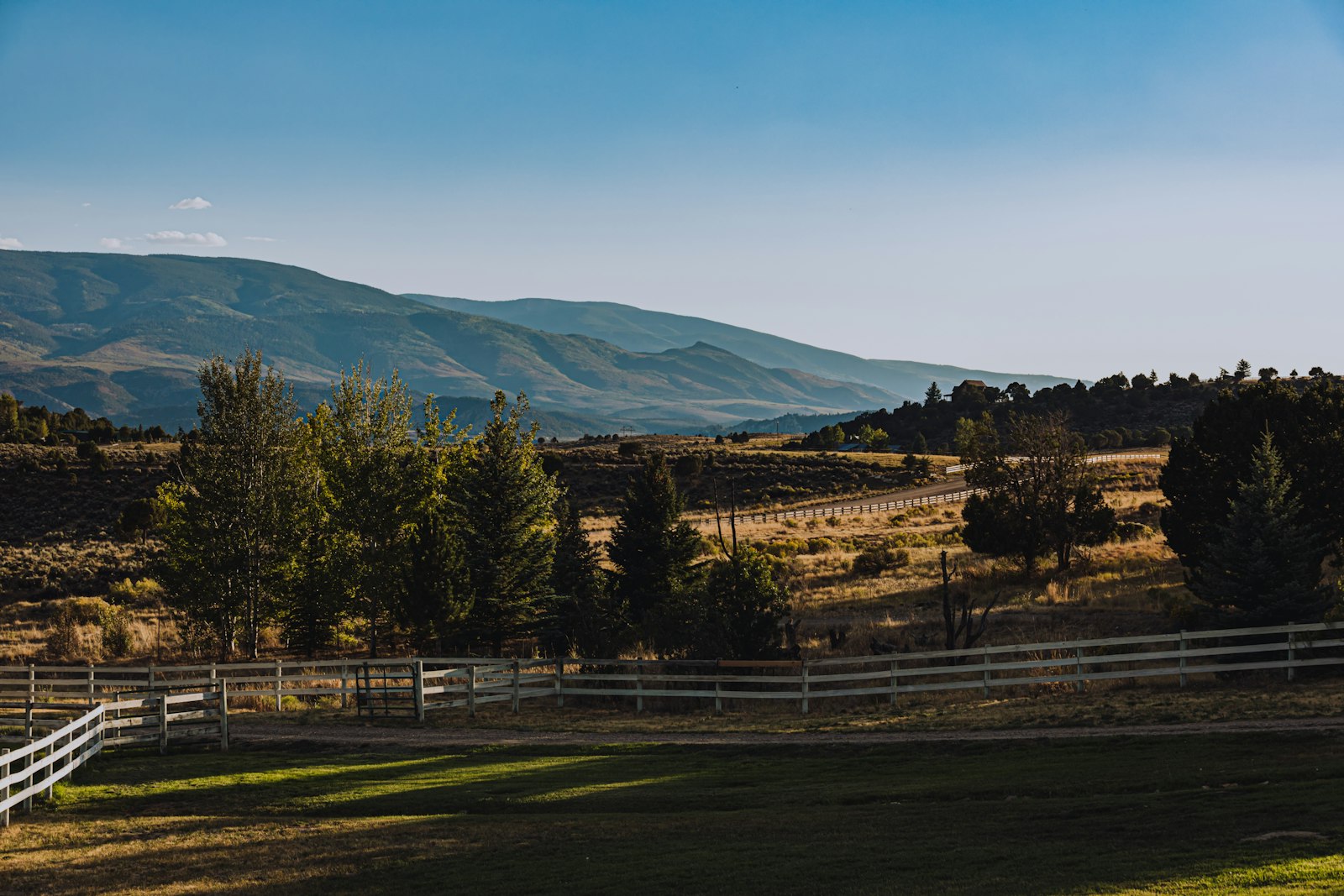
Waimea sits up between the two at around 2,700 feet, on the saddle between Kohala mountain and Mauna Kea, cold enough at night that you will own a jacket for the first time in Hawaiʻi. Under ten thousand people. The post office calls it Kamuela, because Kauaʻi already had a Waimea, and you will spend a year explaining that to people on the mainland.
You probably did not drift here. People drift to Puna. They move to Waimea because a job did it — the North Hawaiʻi community hospital, one of the schools, the ranch, an observatory office, a resort down the hill. Which means you arrived with a salary, a lease and a calendar, and about four weeks later you noticed the real problem.
Waimea is four towns using the same two miles of highway
Here is the thing nobody will say to your face, and the reason this town is a strange place to be new in.
Waimea is not one community of nine thousand people. It is four separate populations who share a grocery store, a post office and nothing else.
There are the ranch and ag families, some of them four and five generations deep in this exact valley, whose social life runs through family, church and the arena, and who were here long before any of the rest of it arrived. There are the observatory people — Keck and the Canada-France-Hawaii Telescope both run their headquarters out of offices on Māmalahoa Highway, so the town holds a dense population of engineers, technicians and astronomers, most of them from somewhere else, many of them working against the mountain's schedule rather than the town's.
There are the resort staff, who mostly live up here or in Waikoloa Village because the Kohala Coast itself is hotels and golf, and who drive down the hill to the Mauna Kea, Mauna Lani, the Orchid and the Waikoloa properties. And there are the prep-school parents — Hawaiʻi Preparatory Academy and Parker School pull families from across the north of the island and, in HPA's case, from off it entirely.
Say that out loud and you will recognise your own street. The four groups are unfailingly polite to each other in the checkout line at KTA and they do not socialise. Nobody decided that. It is what happens when four populations arrive in one small cold town for four unrelated reasons and each already has people.
The schedules genuinely do not line up
The second thing, which is less obvious and does more damage: even when two people in Waimea would like each other, their free hours may never touch.
Summit crews and telescope operators work nights and swing rotations. A technician coming off a run of nights is asleep at two in the afternoon and awake at three in the morning, and "come by Saturday evening" is a request to skip a day of recovery. Resort staff work weekends and holidays, because that is when the guests are there — their Saturday is a Tuesday, and their Tuesday is your Thursday. Ranch work starts before light. School families are locked to the academic calendar and, at the boarding school, to a weekend duty roster.
So the ordinary advice — join something, go regularly — quietly assumes a town where everyone is free at the same time, and Waimea is not that town.
The practical version is unglamorous. Find out what somebody's week actually looks like before you propose anything, and then propose the odd hour rather than the obvious one. A Wednesday morning walk works for the night-shift person and the resort person and nobody else. A pre-dawn start works for the ranch side and the runners. The hours that are dead for you are the open ones for half the town.
What the town actually gives you to show up to
For a place this size, Waimea is unusually well supplied with standing appointments. This is the part that works in your favour.
The markets are the town's real civic centre. At the historic Pukalani Stables on the Kohala side you get produce, flowers, prepared food and the Paniolo Heritage Center next door, on more than one morning a week rather than just the weekend. The town's other long-running Saturday market has changed venue in recent years — check where it is currently sitting before you drive in. Buy from the same three vendors for a month. Being a regular is an actual status here and it is available to anyone with the patience to turn up.
Kahilu Theatre programs far more than a town of nine thousand has any business supporting, which means it needs volunteers, ushers and bodies in seats — and volunteering puts you backstage with the same crew repeatedly instead of in an audience once.
The Waimea Community Association runs a monthly open session where county staff, school people and utility people report to whoever turns up. It is not a social event and it is the fastest way to learn who actually runs things in this town, which is worth more in year one than any number of pleasant conversations.
Ulu Laʻau, the Waimea Nature Park, is the Waimea Outdoor Circle's long-running native-plant restoration along the stream, and restoration work is the most reliable adult friendship machine there is — four hours of shared physical labour beats four dinners. The district park fields and gym carry the youth leagues, and the Parker Ranch Round-Up Club's arena keeps a rodeo season the ranch families organise their year around.
And then there is the ground itself. Mana Road runs off behind town around the flank of Mauna Kea, unpaved, long and exposed, and it is where the local runners and cyclists actually go. Conditions and access on it change; check before you commit to it, and do not do the big stuff alone the first time.
The drive decides more than you expect
Waimea is a hub, which is a mixed blessing. Honokaʻa is a short run east along Hāmākua, Waikoloa Village is down the hill and dramatically drier, the Kohala Coast is twenty-odd minutes, and Hilo and Kona are each roughly an hour on a good day.
That geometry makes Waimea the one town on the island where people will actually drive to you. It also means your acquaintances are scattered across three microclimates, and a plan that requires two people to drive is a plan that dies in the group chat.
The weather is a social fact here, not small talk. The town straddles the wet-dry transition — the Hāmākua end near Church Row is green and often fogged in while the Kohala end is brown and sunny, over a distance you could ride a bike. Evening mist rolls through, the temperature drops, people go home early, and an outdoor plan that is fine on one side of town is a wash-out on the other.
The part nobody says out loud
If you have been in Waimea a year and still do not have people, it is not because this is a cold town socially. It is because you landed in one of four parallel populations, on a shift pattern that does not overlap with two of the others, in a place where nothing collides by accident.
The fix is the same one that works everywhere on this island and is harder to avoid here: somebody has to name a specific thing at a specific hour and say it out loud. If you are the new one, it will not be them — not out of coldness, but because their week is already full and yours is not. Say the plan, say the hour, say whose truck.
YKnot is built for exactly that gap: people here post plans they're already going to — a hike, a dinner, a paddle — with a spare seat, and you ask to join. It's members-only and everyone's ID-verified, so you know who you're connecting with.
Honest note about this island: most of what's on YKnot today sits on Oʻahu, so Waimea is open ground. On a plateau where four populations never cross, the first market morning or Mana Road run anybody posts from up here is going to be somebody's, and it may as well be yours.
See what's happening in Hawaii →
Cover photo by Tyler Delgado on Unsplash.