
Things To Do
Jiu jitsu gyms in Honolulu: what your first class is actually like
What a first jiu jitsu class in Honolulu is actually like, how to pick a room by its people instead of its lineage, and where the friendships start.
By YKnot Admin · · 5 min read
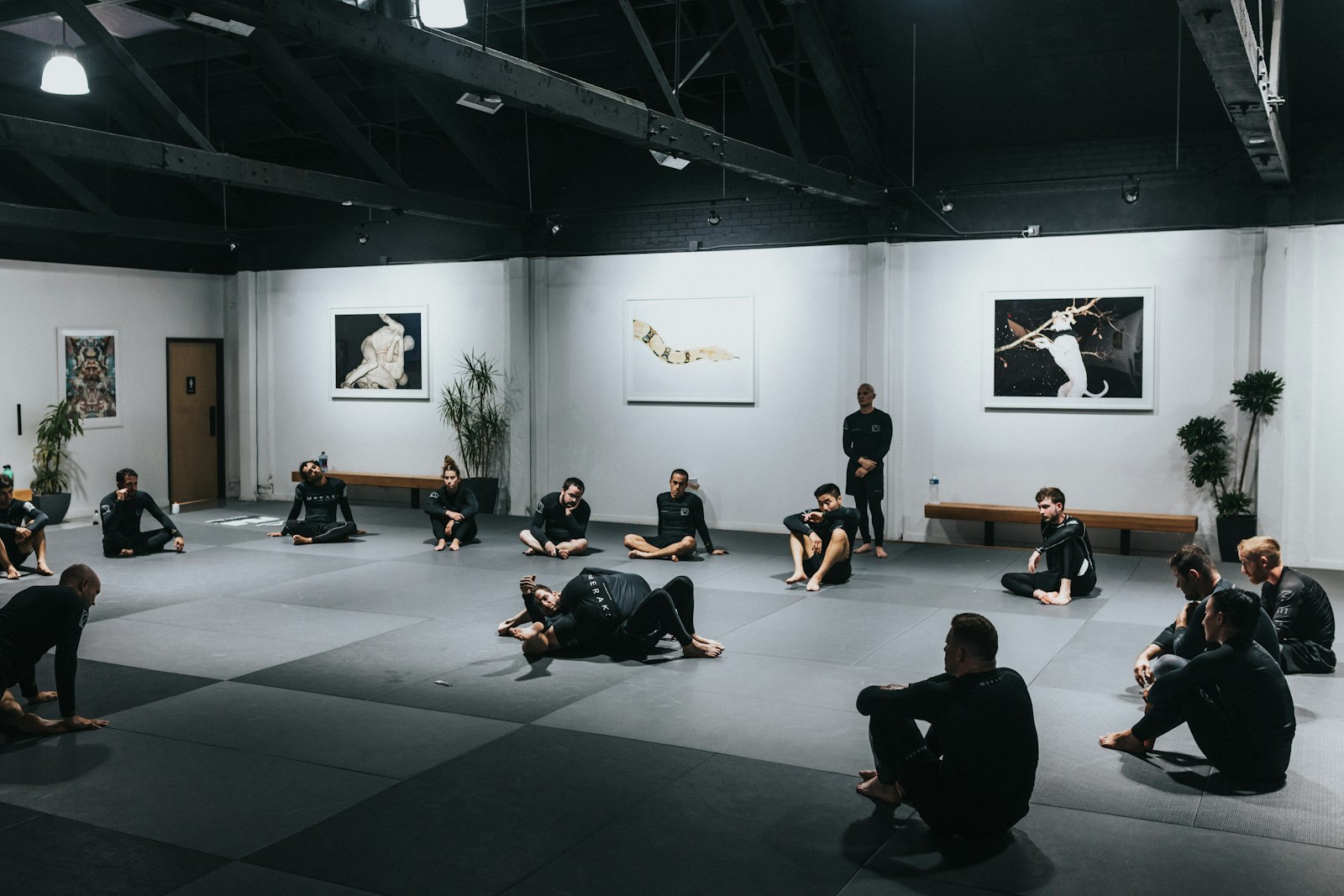
Most ways of meeting adults here ask you to be charming. Jiu jitsu gyms in Honolulu ask you to show up on time, shake a stranger's hand, and be bad at something for an hour in front of people who were also bad at it once. That is a lower bar and a faster one, which is why a grappling room is one of the quickest social on-ramps on Oʻahu.
Grappling is not niche here. It is normal to find out the guy at the next desk trains, or that somebody's uncle has a black belt. The rooms run from Kalihi through Kakaʻako and Kaimukī, out past Pearl City, and over the Koʻolau.
Your first class is mostly being shown things, slowly
Nobody is going to fight you on day one. Arrive fifteen minutes early and say at the desk that it is your first class. That sentence does a lot of work — it points you at the fundamentals session rather than the advanced hour, and it tells the coach to give you a partner who will not wreck you.
Ask ahead what to wear and whether they loan a gi. Some keep loaners for beginners, some run no-gi in a rash guard and shorts, and it varies room to room, so call rather than guess. No shoes on the mat, no jewelry.
The hour usually goes: a warm-up that winds you faster than you expect, a technique shown twice at speed and once slowly, then twenty minutes drilling it with a partner who talks you through it. You will forget the first step immediately. Everyone does. At the end there are live rounds, and a first-timer often watches those or does one light positional round with an upper belt being careful on purpose.
Honest part: you will be sore in muscles you have no name for, your grip will quit before your lungs do, and being controlled by someone smaller than you is strange at first. None of it requires you to get in shape beforehand. The room is how you get in shape.
How to choose between jiu jitsu gyms in Honolulu
Start with geography and the clock, not reputation. The best gym on the island is worthless if it means crossing town at 5:30pm on the H-1. Pick two or three near home or work whose beginner classes land at an hour you can defend every week.
Then watch a class before you pay for anything. Does anyone greet the person who walked in alone? Do the upper belts slow down for white belts, or hunt them? Is the mat visibly clean? Are there other adults who started late, and are the women in class treated as training partners?
Lineage, medals, and the names on the wall matter far less in year one than whether those people are patient. A famous affiliation with a mean room will make you quit in six weeks. A modest room where three people learn your name in a month will keep you for years. The same logic applies to the classes you can walk into without a membership: the room's people are the product.
The etiquette is hygiene, tapping, and listening
Hygiene is not politeness here, it is the actual rule. Wash the gi after every session and keep your nails cut short. Cover any open cut, and stay off the mat entirely with a skin infection or a rash you cannot explain — these move fast in contact sports, and the CDC's guidance on MRSA is worth ten minutes before you start.
Tap early and tap often. Tapping is not losing; it is what makes the whole thing survivable. Tap before it hurts, not after, and tap out of any position you are stuck and panicking in. Two clear taps on your partner and everybody stops.
Do not spaz. Explosive strength against a beginner is how people get hurt, and it marks you instantly. Go slow and let the round be practice. When an upper belt stops mid-round to show you where your elbow should be, say thank you and try it — that is the room investing in you.
And never train through an injury. Tell the coach, sit out, see a doctor, come back. The shoulder you protect in October is why you are still training in March.
The friendships happen in the ten minutes after class
Class ends and nobody leaves. People sit against the wall, unwrap their fingers, argue about a position, and talk about everything else. That ten minutes is the actual social event. Stay for it, even when you are wrecked.
Go twice a week rather than once. By the second week the same faces expect you, and by the third somebody says out loud that you missed Tuesday — a small thing, and the exact thing that is missing when you have just moved here and know nobody. Eventually someone suggests food after the evening class, and that is how a training partner becomes a friend.
It is also a full social circle where drinking never comes up, which is rarer than it should be and worth knowing if you are building a social life without it.
The mat handles your Tuesday. Saturday, when everyone appears to have plans nobody thought to include you in, is the one YKnot is aimed at. A member with something already on their calendar says how many seats it has going spare; anyone who wants one asks; the host reads the requests and chooses. Verification of identity is required before you can do any of that, and the meeting spot is only shared with the people the host said yes to.
See what's happening on Oahu →
Cover photo by Nathan Dumlao on Unsplash.