
Finding a dive buddy in Kona, when the gear is already in the garage
You have the card, the gear and the coastline. What you don't have is a second person free on a Tuesday. How to find a dive buddy in Kona.
By YKnot Admin · · 7 min read
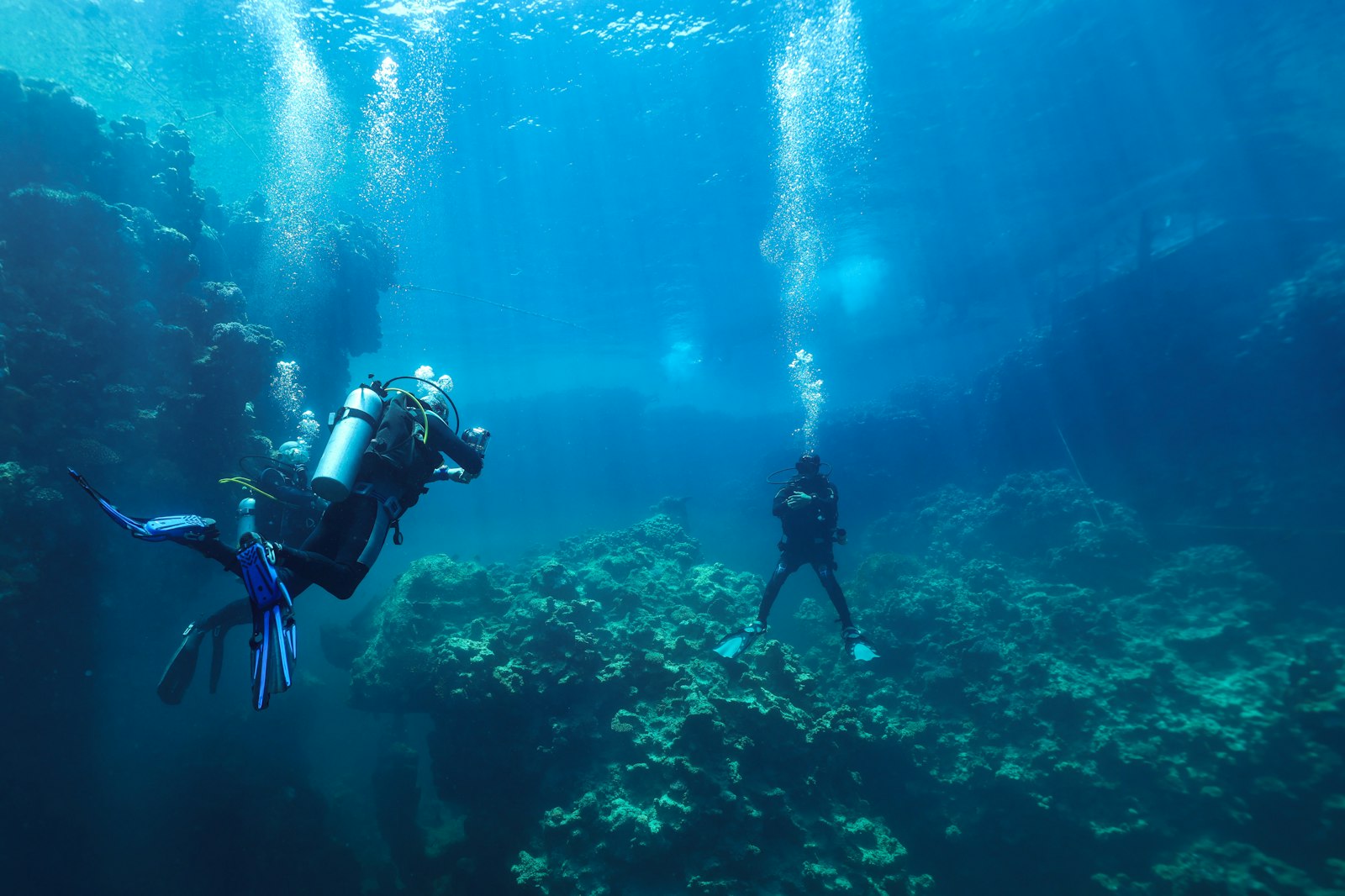
Your BCD is hanging in the carport. Your card is somewhere in your wallet. You live twenty minutes from water people fly across the Pacific to get into, and you went three times last year — twice on a charter you paid for because it was the only way to be underwater with another certified adult.
That is the whole problem, and it is not a skill problem.
The buddy rule is not advice you are free to weigh. It is the condition of going. Every other obstacle here has a workaround. Surf is up, you drive north. Vog is thick, you go anyway. Tank is empty, you get it filled. But there is no version of shore diving alone a sensible person talks themselves into, so the one missing input — another human, free at the same hour — decides how much of your life you spend underwater.
Kona is the serious side, which makes the shortage stranger
This is the diving town. The shelf falls away fast enough that real depth sits a short swim off a lava shoreline, the leeward coast is protected from the trades that chew up the rest of the state, and the water is clear on a boring day. That is why the charter fleet exists and why Honokōhau moves boats before first light.
None of which helps you. The visitor economy is built to sell you a seat on a boat; it is not built to hand you a partner. Charters are the right answer offshore — the deep pinnacles, the mantas at night, the blackwater trips out where the bottom is thousands of feet down. Nobody does those from a truck.
A buddy unlocks the other eighty percent: the ordinary shore dive on a Thursday before work, free, twenty minutes from the house, and why you moved to this side.
Why the shoreline itself makes the partner non-negotiable
The Kona coast is not a beach coast. It is lava that ends at the water, and every place you can get in with a tank is known by name to everyone who dives here — which tells you how few there are.
Hōnaunau is the one most people learn first; everyone calls it Two Step, for the pair of worn lava ledges you step down off into deep water within a fin kick or two. It is also the one that teaches you about swell fastest: those steps are calm for months, then a south swell arrives and turns the exit into the hazard of the day. Getting out is always harder than getting in, and on lava with a tank on it is harder again.
North of town, Kaloko-Honokōhau and the water near the harbor mouth give gentler entries and the turtle traffic everybody knows about. South, Keauhou Bay is the launch point for the night dive the mainland has heard of. In between is a lot of coastline you cannot get in from.
Two things to check rather than guess at. Parts of this coast are managed water — conservation districts and fisheries management areas with their own rules, revised more than once — so look up the current rule for the spot rather than asking whoever is parked next to you. And nobody here gets in without a diver-down flag: the boat traffic between the harbor and the sites is constant, and a shore diver without a flag is invisible to it.
Every one of those is an argument for a second person, not for staying home. No lifeguard, an exit that changes with the swell, and a shoreline where the nearest other human may be a quarter mile away over the rocks.
The shape of the island decides who your buddy can be
"Kona" is a fifteen-mile answer to the largest island in the chain. Where someone lives predicts whether they will ever be in the water with you on a weekday better than anything on their certification card.
North of Honokōhau the coast keeps going and gets better. Puakō has road-end accesses onto a long shallow reef. Mahukona is an old landing where you go down a ladder into deep water over the debris of what used to be there. Kawaihae is a working harbor. Real dives — but from town it is a drive, and the trades bend around the north end and come down that coast harder, so the calm window is earlier and shorter. Kohala is weekend diving. Someone in Waimea or up the Waikoloa side can be an excellent Saturday partner and will never be the person you call at 5:40 on a Thursday morning.
The Hilo side is effectively a different island. Richardson and the Keaukaha shoreline are sheltered pockets on a coast that takes the trades head-on, and visibility there is decided by what the rain did upslope the night before, not by a swell chart. Fewer entries, a narrower window, and a drive over the saddle to Kona water that eats the better part of two hours each way. East-side divers get to this coast as a planned weekend, truck loaded the night before — a once-a-month arrangement, not a standing one.
Be honest about geography before you are generous about it. Two people twenty minutes from the same entry will out-dive ten spread across this island, every year, without trying.
The honest answer: you are not building a network, you are finding two people
Most advice tells you to grow a circle. Diving does not work that way.
Divers do not rotate through strangers. They dive with the same two or three people for years. You learn someone's air consumption, their habit of drifting deeper than they said, whether they check on you or just swim ahead, how they behave when something small goes wrong at depth. That takes several dives to build and it does not transfer. A buddy is a person whose behavior you can predict.
So the target is small. Two reliable people and a standing morning. Not a scene, and not a group chat with forty members and no plans in it.
The other thing nobody says: freedivers and scuba divers are not each other's buddies. Kona has an unusually deep freediving and spearfishing culture, for the same reason the scuba is good — deep blue water close to the rocks. But a freediver on a depth line needs a partner trained for a surface blackout, and a spearfisher's one-up-one-down rhythm is a different discipline again. Plenty of people here do both. Nobody mixes them inside one session.
Where it actually gets solved on this coast
Start with the shops. The operators cluster near Honokōhau, and those counters are where resident divers get sorted from the five-day-trip customer — different gear, different questions, different hours. Walk in with "I live here, I have my own gear, I want people who dive shore on weekday mornings." The person filling your tank knows who is actually diving, how often, and whether the shop runs anything for locals.
Then be findable at the hours residents are in the water, which here means early. The west side is glassy at dawn and the onshore wind builds through the late morning, so the resident rhythm is a 6 a.m. dive and a normal working day after it. The people at Two Step at sunrise on a Tuesday in February are not on holiday.
A course you do not strictly need works for the same reason: a room full of people who just paid money to keep diving.
Then do the unglamorous part: propose a specific thing. Not "we should dive sometime." A place, a day, a time you will be standing there regardless. Divers say yes to specifics and ignore openings, because the whole activity runs on a plan agreed beforehand: max depth, turn pressure, what happens if you get separated.
The vetting conversation after that is the same everywhere: last dive and where, air consumption, the turn pressure you agree before you are wet, and a deliberately boring first dive at a familiar entry. We wrote it out in full for Oahu and not a line of it changes here. What changes is the shoreline — and the shoreline is the reason you want the second person at all.
YKnot is built for exactly that gap: people here post plans they're already going to — a hike, a dinner, a paddle — with a spare seat, and you ask to join. It's members-only and everyone's ID-verified, so you know who you're connecting with.
See what's happening on the Big Island →
Cover photo by Ekaterina Zlotnikova on Unsplash.