
Things To Do
Finding a dive buddy on Oahu
You are trained never to dive alone, so no buddy means no diving. How to find a dive buddy on Oahu and vet one properly before you get in.
By YKnot Admin · · 5 min read
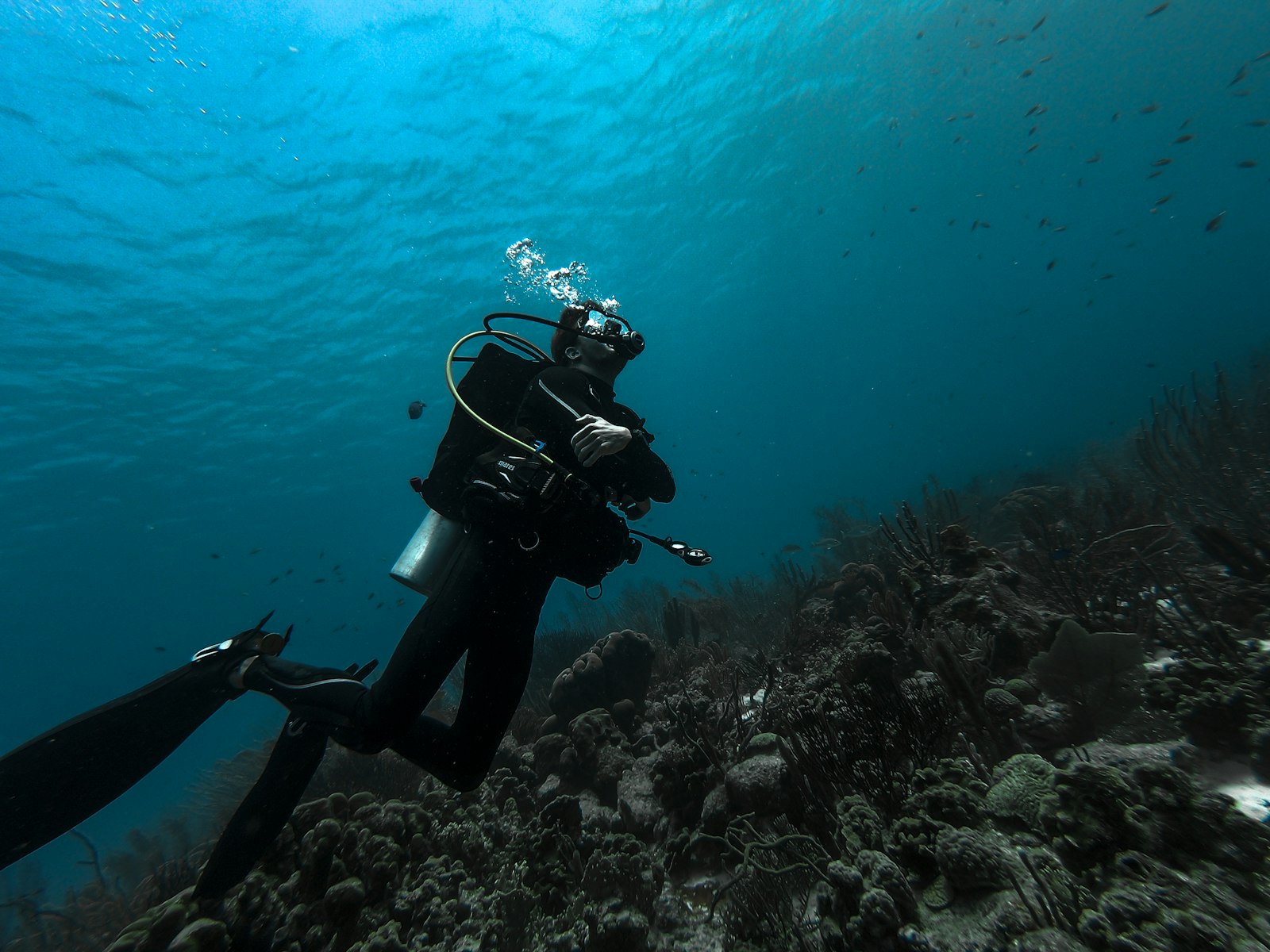
Most hobbies degrade gracefully when you're on your own. You can run alone, surf alone, eat alone. Diving doesn't degrade. You were trained never to do it solo, you agree with that training, and so a certified diver without a dive buddy is someone with a closet of gear who hasn't been wet since they moved here.
It's a common situation here: certified somewhere else years ago, arrived mid-career for a job or a posting. Your card is fine, your skills are rusty, and the people you used to dive with are five time zones away.
A dive buddy is the gap, not access
Charters will take you out. That isn't the same as having a buddy.
You can book a two-tank boat dive this weekend and be handed an insta-buddy on the swim step — someone whose name you learn thirty seconds before you agree to be responsible for their air supply. It works, mostly. It is also why "who's your buddy?" is the worst question on a full boat.
What you want is one or two people whose habits you know: someone whose gas consumption you can predict, who you've watched clear a flooded mask without going wide-eyed. That takes a few dives and can't be bought. If you landed here recently, it's the same problem as everything else in your first months on Oʻahu — coordination, wearing a wetsuit.
Vetting someone you're about to share air with
Ask before you agree to a site, not in the parking lot:
Certification, and when. Currency matters more than level: Open Water from 2011 with nothing since is a different diver from one with forty dives since.
Last dive, and how many this year? After a long layoff the honest answer is a refresher — a pool session or a supervised scuba review — before open water. A buddy who finds that overcautious has just told you something useful.
What depth are you comfortable at? Not certified to. Comfortable at. The gap between those numbers is where problems live. Nobody needs talking into 100 feet with a new person; the deep wrecks off Waikīkī will be there next month.
What's your air consumption like? Ask for a SAC rate, or just "do you usually come up first?" No wrong answer — a bigger person breathing more gas is physics — but a pair who never discussed it ends a dive early and surprised.
Computer, gas, and how conservative? If one of you runs a liberal setting and the other pads every ascent, agree now that you dive the more conservative computer. And ask whether they carry an SMB and can deploy it — on a boat dive with any current, that isn't optional.
The social half is the same as meeting anyone new from the internet: somewhere public first, and a third person who knows where you'll be and when you're due back.
The surface conversation you don't skip
Agree the dive before you're in it — out loud, both of you, every time.
The plan gets set by whichever of you is less current, less trained, or less comfortable — never by the more ambitious one, and never past what either of you is certified and equipped for. Somebody who wants to take you deeper than your training, into an overhead, or onto a site you've said no to is not somebody to get in the water with.
Max depth. Max time. The route, and which way you turn at the end of it. Turn pressure, said as a number — we turn at 1500, we're out with 500 — including the part where whoever hits it first calls it and nobody sulks. Lost buddy: look for a minute, ascend, meet on the surface. Hand signals, because not everyone learned the same ones. Where each of you keeps your alternate, and how your weights come off.
Then the buddy check, properly, not the shrug version. BCD inflates and dumps. Weights secure and releasable. Releases, found with your hands. Air on, purge both regs, watch the gauge while they breathe. Final check, mask to fins. Ninety seconds, and most of what separates a buddy from someone floating nearby.
Either of you can call the dive, at any point, for any reason including "I don't feel right about this". No explanation owed.
The first dive together should be shallow and boring
Shore, not boat. Flat, not swelly. Somewhere you can walk out of.
The Waiʻanae side is the usual answer for calm water and easy entries. The North Shore spots around Sharks Cove are a summer option only; once the north swell fills in they're a good way to get hurt. Check the surf and wind that morning rather than last week's memory, and walk down to look at the entry before you kit up. Carrying tanks over wet rock in surge is not where you learn how someone new behaves.
Keep it shallow and short. Watch how they enter, whether they check their gauge unprompted, whether they look for you or assume you're there. You'll know inside twenty minutes whether there's a second dive.
Sort your flag and float rig for shore diving here, and know in advance where you'd go if something went wrong — chamber access in this state is not a thing to improvise on a Sunday afternoon.
What you're actually looking for
Not the most experienced diver you can find. The one who calls a dive early without making it a moment, runs the same buddy check on dive 200 as on dive 12, and texts you Thursday asking whether the swell looks okay for Saturday. Two or three dives tells you. Getting to dive one was always the hard part.
Dive one is the hard one, and that's the one YKnot is useful for. A member posts the dive they're already doing — site, entry, depth, time — with a buddy slot open, and you ask for it. They pick. Everyone has been ID-verified, and the exact meeting spot comes after that, so the person on the other end of your octopus isn't a stranger by the time you're kitting up.
See what's happening on Oahu →
Cover photo by Mitchel Wijt on Unsplash.