
Things To Do
Climbing gyms in Honolulu: walking in alone the first time
What a first visit to a climbing gym is like if you have never climbed: shoes, the intro, bouldering versus ropes, and the etiquette newcomers miss.
By YKnot Admin · · 5 min read
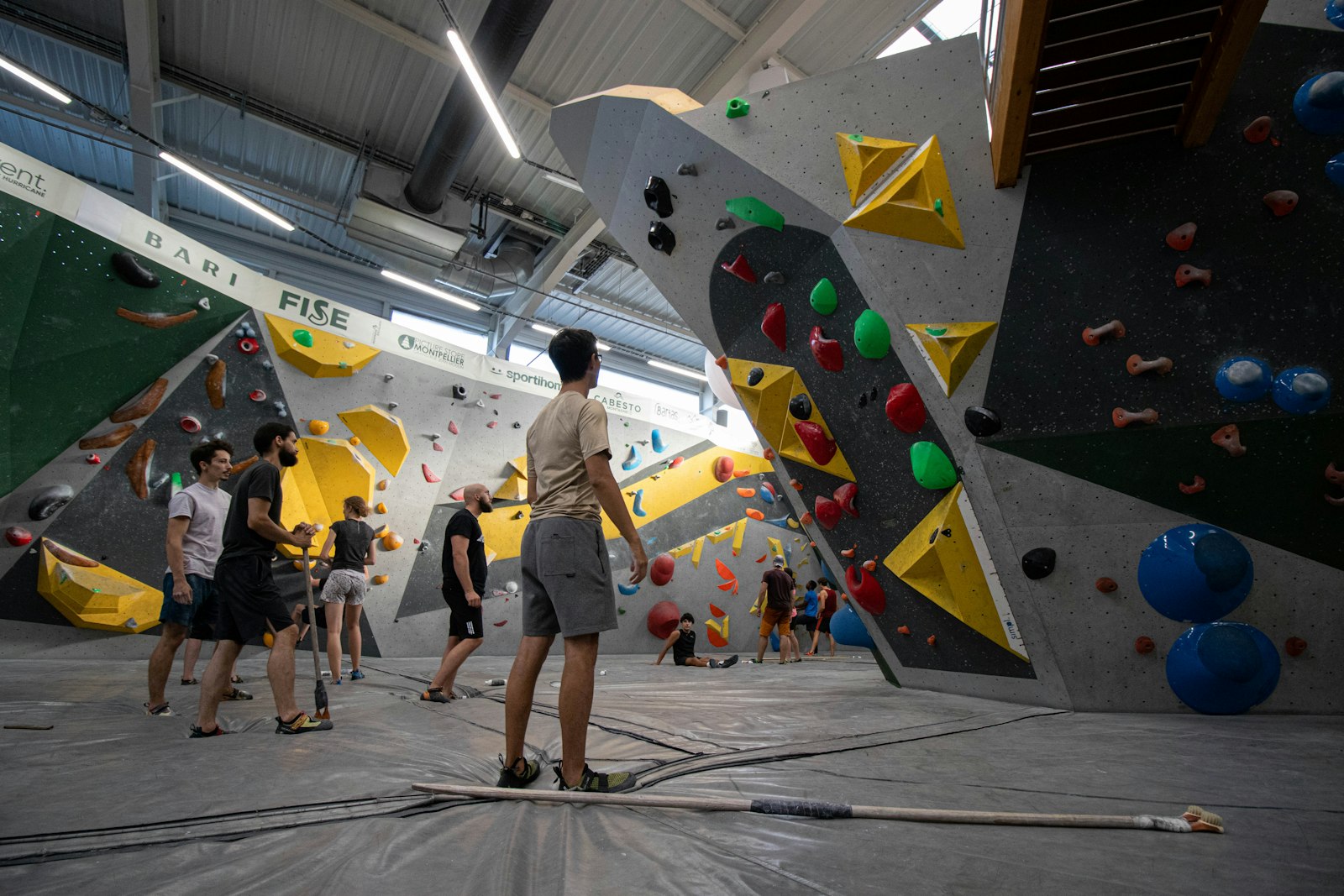
Two strangers are sitting on a mat arguing about where a left foot should go. Neither knew the other's name an hour ago. That scene is ordinary in climbing gyms in Honolulu and close to unthinkable in a regular gym, where everyone has headphones on and the contract is that you leave each other alone. If you want to meet people without having to be outgoing first, the format does the work. The catch is that a first visit is intimidating in a specific way: everyone else knows the etiquette and you do not.
Why climbing gyms in Honolulu feel different from a regular gym
The wall creates a shared problem, and shared problems create conversation.
A route — a set of same-colored holds going up the wall — has a correct solution, and finding it is public. You fall off, someone who has done it says "get your hip into the wall on that second move," you try it, it works, and you have talked to a person. That exchange is called beta, and it runs both ways: a strong climber often cannot see why a move is hard for a newer one.
The other half is the rest periods. Ninety seconds on the wall, five minutes sitting — an hour of the evening on a mat beside strangers with nothing to do but talk about what just happened. A spin class ends with you having spoken to nobody, the limit drop-in fitness classes around Honolulu run into. There are only a few gyms on Oʻahu, so the crowd is small and faces start repeating by about the third visit.
What the first visit actually involves
You do not need upper-body strength on day one. That is the most common reason people stay home and it is wrong. Beginner routes are climbed mostly with your legs — you stand up on your feet and use your hands for balance. People who arrive strong but new haul themselves up with their arms, burn out in twenty minutes, and get beaten up the wall by somebody half their size with better footwork.
Expect to rent shoes: tight and wrong-feeling for the first hour, snug rather than painful. Wear anything you can move in. Expect a waiver and an orientation covering falling, landing and where it is safe to stand, which is the part not to rush. Check hours and intro-class times before you drive over, and take the beginner class if one is running — you learn more in that hour than in three visits alone, and everyone else in it is new too, the same way a first jiu-jitsu class puts you in a room where nobody has to pretend.
Bouldering versus ropes, and why the rope needs a partner
Bouldering is where you start alone; roped climbing is where you meet people by necessity.
Bouldering is short climbing over thick mats, no ropes, topping out around fifteen feet. You need nothing but shoes and can leave whenever, the problems are short and hard, and the mat at the base is where the conversation happens. That is the right first visit.
Roped climbing is the taller walls, and most of it needs a partner — one climbs, one belays the rope that catches the climber. Some gyms have auto-belays, which take up the rope so you can climb alone.
Belaying is a taught skill with a real consequence if it is done wrong, so learn it from the gym and nobody else. Do not let a friendly stranger teach you at the wall, do not agree to belay anyone before the gym has tested you, and do not be caught by someone it has not checked. Every gym runs a belay lesson and a belay check, and that is the only route in; the American Alpine Club publishes the annual accident reports the sport learns from, and the patterns are not exotic. Once you are signed off, needing a partner becomes the advantage: you need someone, they need someone, and "are you climbing with anyone?" is an ordinary sentence to say to a stranger. Coffee afterward is where meeting someone new safely starts to matter.
This is all indoor climbing. Outside has different hazards and no staff, and is not something to take up because an acquaintance of two weeks offers.
The etiquette a newcomer gets wrong
Four things, and all of them are about the floor, not the wall.
Do not walk or climb underneath someone on the wall. A falling climber lands in a wide, unpredictable area that belongs to them. Look up before you cross the room.
Do not sit on the mat directly under a problem. It is seating, but only off to the side. Parking at the base of a route somebody wants to try is the most common newcomer mistake, and nobody will tell you.
Do not give beta unless it is asked for. For a lot of climbers, working it out alone is the point, and an unsolicited "just use your left hand" takes that away. The phrasing that always works is "do you want beta?" — asked once, accepted either way.
And take turns. If two of you are on the same problem, alternate attempts instead of monopolizing it. The alternating is what produces the conversation: you rest while they climb, they rest while you climb, and after forty minutes of that you know each other. Which is the part worth coming back for — in this room, failing on the move is not the obstacle to the talking. It is the subject of it.
Alternating attempts on one problem makes you friendly with a stranger for an hour. Getting from there into each other's weekends is the part the gym does not do. That is the whole of what YKnot is: members' real plans, the spare seats on them, and the host choosing who comes — with the meeting place going out once they have.
See what's happening on Oahu →
Cover photo by Nathan Cima on Unsplash.