
Things To Do
Reserving a Beach Park Pavilion on Oʻahu Is Not What Most People Think
What reserving a beach park pavilion on Oʻahu actually gets you, why most pavilions cannot be held for exclusive use, and how to host twenty people anyway.
By YKnot Admin · · 5 min read
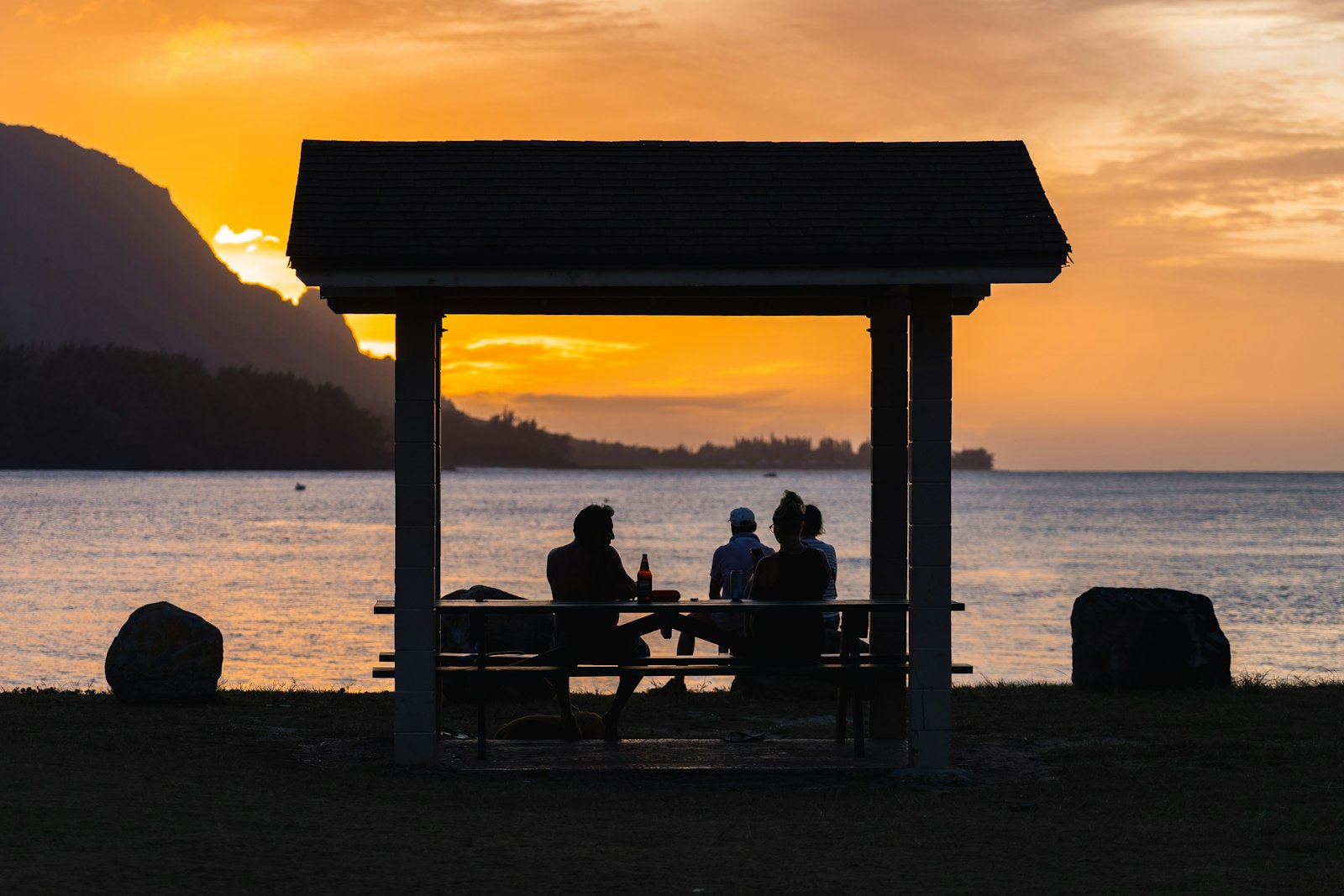
Reserving a beach park pavilion sounds like the obvious fix for a group too big for your living room. It nearly is — but reserving a beach park pavilion on Oʻahu does not work the way most people assume, and the gap between the assumption and the rule is where good plans quietly fall apart. You mostly do not book the place. You get there early and you share it. Here is the honest version, and it is still good news.
A pavilion solves four problems in one move
Shade, tables, restrooms and parking are the four things that sink a beach gathering, and a pavilion handles all of them at once.
Without one, someone brings food and there is nowhere to set it down. The sun moves and half the group is squinting on a towel with a plate on their knees. People leave because there is no restroom.
A pavilion also flattens the hosting hierarchy. Instead of a host stuck in a kitchen, everyone arrives at the same nothing and builds it together — someone claims the table, someone hauls the cooler. That shared setup is half the reason people end up talking, and it costs about what the best free things to do on Oʻahu cost.
What you can actually reserve
In City and County of Honolulu parks — which is most of the beach parks people on Oʻahu use — pavilions may not be reserved for exclusive use.
That is the department's own language in its picnic rules, and it undoes the picture most newcomers arrive with. Picnic sites are first-come, first-served. There is a long-standing exception for the picnic sites at a couple of the big urban parks, Ala Moana and Kapiʻolani, on a limited set of summer dates booked well in advance. Everywhere else, the roof belongs to whoever is sitting under it.
A picnic permit is a separate thing, and it turns on group size. Family-sized groups do not need one at all; the requirement kicks in somewhere well above a party of twenty. Confirm where that line sits now rather than trusting a number you read somewhere.
The City park use permit page is where to check all of it, because thresholds, forms and rules change, and the details differ park to park. State parks are a different agency entirely, the Division of State Parks at the Department of Land and Natural Resources, with its own process. Work out which one you are standing in before you promise anyone anything.
What a permit gets you, and what it does not
Even where reserving a beach park pavilion is possible, you are holding a structure; you are not closing the park, the beach, or the parking lot to anyone else.
A paper with your name on it feels like you booked the place. The sand in front of you is still a public beach, the lot is still first-come, and the family setting up a few steps away has as much right to be there as you do.
So plan everything assuming you are a guest in a shared space: no wall of coolers across a walkway, nothing strung between trees unless you know that is allowed. Alcohol is prohibited in City parks. Pop-up canopies carry their own separate permit, so check that page before you pack them.
Sharing a space that stays public
Being generous with your extra table space is how you become the group people are glad to see show up.
There is almost always a family nearby with too much stuff and nowhere to put it. If you have an open table and they plainly do not, offering it changes the whole afternoon. That is not a strategy, it is how people here treat a shared park.
The flip side is noise and footprint. Keep the speaker at the volume of your own group, not the park's. Carry out what you carried in — bins at a busy beach park fill up, and anything left beside a full one is litter.
The practical shape of a pavilion party
Get one person there early, assign the cooler, and bring more shade than you think you need.
Once reserving a beach park pavilion is off the table, early is the whole strategy. If the table cannot be held for you on paper, somebody has to hold it in person, and should leave earlier than feels reasonable. The lot fills before the pavilion does. This is the decision the day turns on.
The cooler is the job that must be named out loud. Ice is heavy, it is nobody's favorite errand, and if you leave it to "whoever," you will have warm drinks. Same for the folding table and the trash bags.
Bring shade anyway. A roof blocks the overhead sun and does almost nothing about four in the afternoon, when the light comes in sideways and finds every seat.
The plan when the potluck outgrows your apartment
A pavilion is one of the few ways to host people you do not know well without inviting strangers into your home.
Plenty of people want a bigger social life and stall out at the exact point where the next step is handing out their home address. A public park removes that. You can invite three people you met at a beach cleanup and a couple of their friends, and nobody has to decide how much they trust anyone.
Everything about the food still applies, and that is covered in the potluck rules people here actually follow. The pavilion only changes the scale.
On YKnot this is worth putting up early. Share the open seats at your table while the date is still soft and let the people nearby who are trying to build something on this island ask to come. Pick the morning, then figure out who is bringing the rice.
Cover photo by Jimmy Conover on Unsplash.