
Things To Do
Watching whale season in Hawaii from shore, with someone
Whale season in Hawaii runs roughly November to April, peaking January to March. How to watch humpbacks from shore on Oahu and why to bring somebody.
By YKnot Admin · · 5 min read
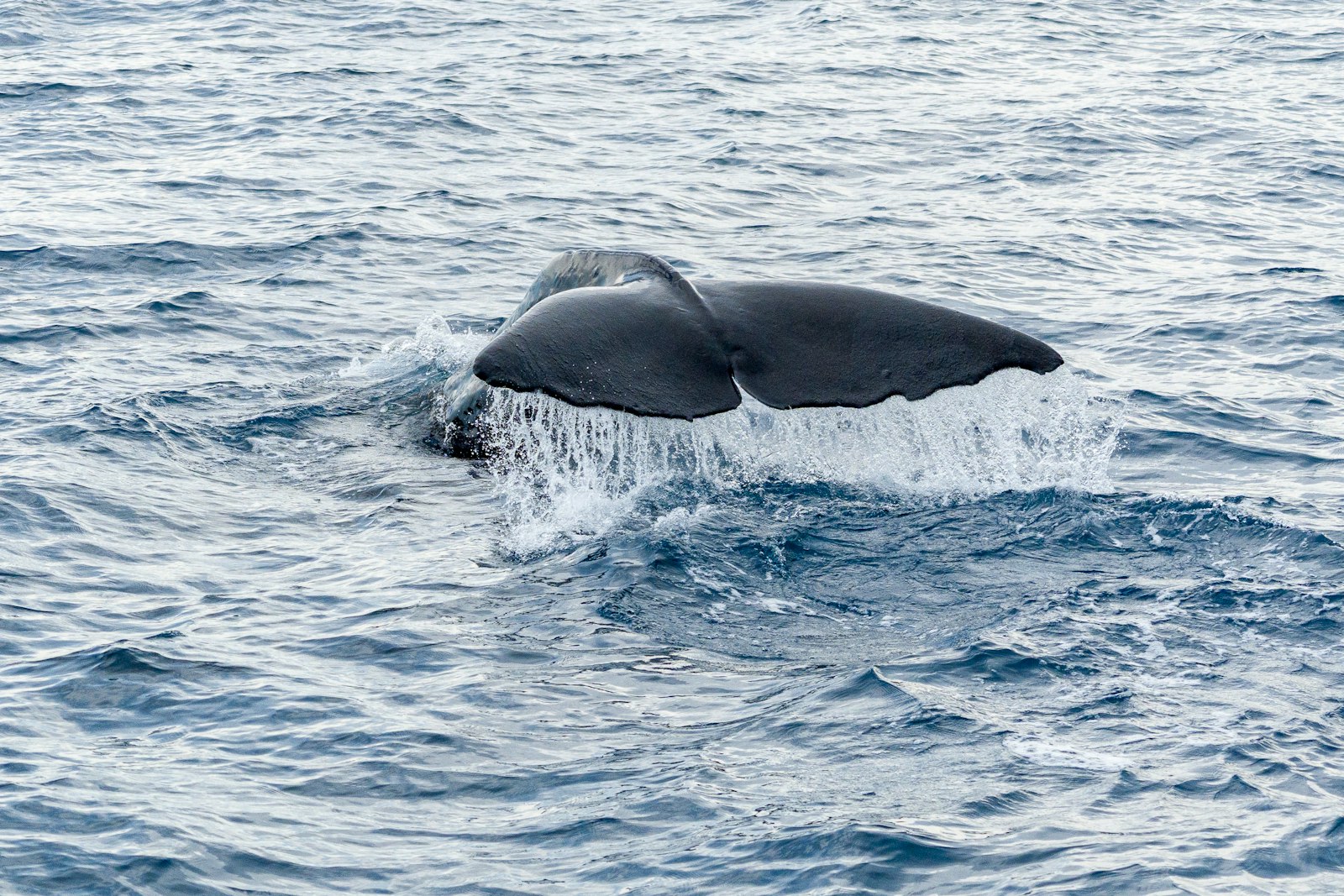
The first sign of whale season in Hawaii is usually somebody else's news: a coworker saw a blow off Makapuʻu on their drive in. Then you start looking harder on your own drive, and a week later you catch one yourself, and whale season in Hawaii has started for you too. Koholā — humpbacks — winter in these waters, roughly November through April, with the peak from January through March. For many families here, koholā are relatives rather than a wildlife sighting, and the season carries weight past the spectacle. You do not need a boat — a vantage point, an hour you are not rushing, and somebody standing there with you.
Shore watching is the good version, not the consolation prize
Plenty of this happens close enough to land that the best seat in the house is free.
People assume the real experience is out on the water and a cliff is what you settle for. Backwards, for most of the season. The animals come in close and elevation beats sea level for spotting. A charter is one outing; a lookout twenty minutes from the house is a habit you keep for four months. It belongs on the short list of free things to do on Oʻahu that never feel cheap.
The one piece of gear that changes the day is binoculars. Not fancy ones — the difference between a smudge and a visible animal is optical, and a cheap pair passed back and forth beats one person squinting.
Learn the sequence and the ocean stops looking empty
The whole skill is knowing what order things appear in: the blow first, then the back, then maybe more.
You almost never see a whale first. You see the blow — a short white puff that hangs for a second and looks, from a mile off, like a wave breaking where no wave should be. Fix the spot, tell the person next to you where it was in plain terms ("straight out from the red roof"), and watch that patch.
What follows is the back: a long dark curve rolling through the surface, sometimes the dorsal fin, sometimes the tail lifting clear at the end of a dive. Once you have seen it a few times you will catch it from a moving car. Let the passenger spot.
The spectacular stuff — the full breach, the pectoral slap, the tail hammering the water over and over — is real and never guaranteed. Some hours you get one distant blow. Some hours the horizon goes off and neither of you speaks for ten minutes.
Patience is the activity, which is why it makes good company
The long quiet gaps are the format, not a failure of the outing.
Most plans need momentum — an activity, a next thing, a reason to keep talking. This one is sitting still and scanning, conversation starting and stopping and nobody minding either. The silences have a job, so they never curdle into awkwardness. That makes it unusually good with someone you barely know.
Two people also see more — one looks left, one looks right. For anyone working through things to do on Oʻahu that aren't the beach, this is the low-effort entry.
The season has a shape, and so does the island
Maui's channel is the famous water, but Oʻahu's south and east shores deliver all season.
The shallow, sheltered water between Maui, Lānaʻi and Molokaʻi is the postcard, deservedly. But it takes a flight, and you do not need one. The southeast corner of Oʻahu, from Diamond Head past Hanauma and Makapuʻu, is a run of public lookouts with steep ground behind and deep water in front, which is the geometry you want.
Timing matters more than location. Early and late in whale season in Hawaii things are quieter, so a February morning and an early November morning are not the same bet. Go often rather than once; a blank hour is normal. Late afternoon pays twice on the south-facing stretches, where the watch rolls into one of the island's sunset positions without moving the car.
Wind and glare beat you more often than the whales do, so bring a hat and stand out of the gusts. Check ocean and trail conditions before you commit to an exposed lookout.
The distances are federal law, not etiquette
These are protected animals, and the approach rules are rules.
If you end up on the water — a charter, a kayak, your own boat, a swim — federal rules bar approaching a humpback within 100 yards by any means, and drones and aircraft have a larger limit of their own. Intercepting an animal, or dropping in ahead of where it is headed, counts as approaching.
Do not take the current details from a blog post. Check them with the Hawaiian Islands Humpback Whale National Marine Sanctuary, which is the authority on what is allowed here and on reporting a whale in distress or tangled in gear. Look it up before the season, not from the deck.
The version where somebody turns up with a thermos
One person names the lookout and the hour; that is the entire organizing effort.
This is a plan you share rather than one you execute. Whale season in Hawaii hands you four months of repeatable outings that are better with company, and the hard part is saying a place and a time out loud. Put the plan up with a seat open, somebody nearby asks to join, and it is happening.
Say what you are bringing and what you are not — binoculars, coffee, a chair — and somebody shows with the other half.
Pick a lookout you can get to before work. Go on a Tuesday, not only a Saturday. The season is short and the animals do not wait for a free weekend.
Cover photo by Winston Chen on Unsplash.