
Things To Do
The Rainbow Drive-In counter is a Honolulu social institution
Rainbow Drive-In on Kapahulu is less a restaurant than a shared table. Why plate lunch is the easiest invitation in Honolulu to say yes to.
By YKnot Admin · · 5 min read
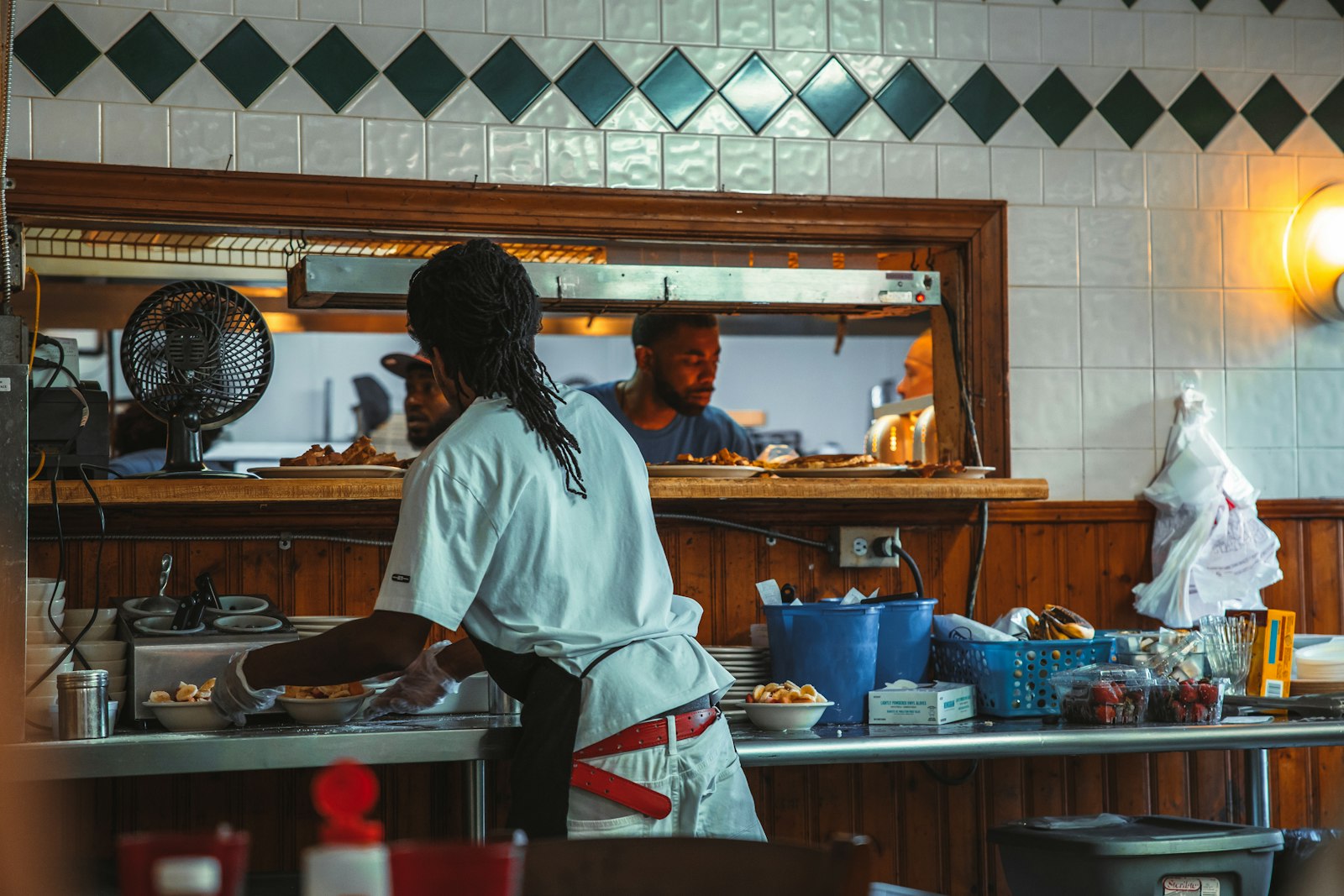
You do not go to Rainbow Drive-In for a meal. You go, stand at the window on Kapahulu, order into the noise, take a number, and then find yourself at a picnic table under the awning with four people you have never met eating three feet away.
That last part is the whole thing. There is almost nowhere else in this town where sitting down next to a stranger is normal rather than weird.
The Rainbow Drive-In counter does the work a host usually has to do
At a restaurant, someone has to carry the conversation from the moment you sit down. At the window, the line does it for you.
You are standing shoulder to shoulder reading the same board. Someone ahead of you orders something you have never tried and you can just ask about it. The order comes back fast, you carry it outside, you find a gap at a table. Nobody is watching you to see how the date is going. Nobody brings a check at an awkward moment.
The whole visit has a shape built into it — queue, order, wait, eat, leave — and that shape is why it works for company you do not know well yet. The setting supplies the structure. You only have to supply the showing up.
Who is there at lunch is not who is there in the evening
The lunch crowd is working. Guys off a job site in boots, nurses from the hospitals up the road, a couple of city trucks parked crooked, someone in an aloha shirt who has thirty minutes. It is loud, it moves, and nobody lingers.
Later it turns over. Evening is families, kids from the park, people fresh off a surf with salt still in their hair, somebody's whole soccer team in matching shirts. Nearer to closing it becomes the place people end up after something else ended — a shift, a show, an evening in Waikīkī that ran out of ideas. The tables get slower and the conversations get longer. How late that runs has moved around over the years, so check the current hours before you build a plan on the end of the night.
If you are bringing someone, that difference matters more than the menu. Lunch is a quick, low-pressure thirty minutes. Evening at Kapiʻolani Park and then the drive-in after is an actual plan that costs you nothing to propose.
Plate lunch is built to be shared
Look at what arrives. Two scoops rice, mac salad, and more protein than one person reasonably eats, in a container designed to sit flat on a table and be reached into.
That is not an accident. Plate lunch comes out of plantation lunch tins and the habit of eating outside with whoever else was working — food portioned for a group, eaten off your lap or a bench, traded around. It still behaves that way. You order a mix plate and one other thing, and you both end up eating off both. Nobody has their own separate experience happening on their own separate plate.
Food you can share breaks the ice faster than food you cannot. This is a big part of why group dinners in Honolulu work best at places with a communal table rather than a long formal one, and it is why the drive-in stays a social room instead of just a fast-food window.
"Let's get plate lunch" is a much easier invitation than "let's get dinner"
Say the two out loud and you can hear the difference.
Dinner is an evening, a reservation, a decision about what to wear, and an hour and a half you cannot leave in the middle of. If it goes badly you are both stuck being polite through dessert. That is a lot to ask of someone you met last week.
Plate lunch is twenty minutes, outdoors, on the way to something else. You can suggest it on a Tuesday. You can suggest it to someone you have only talked to once. If it is great, you stay and get a shave ice down the street after. If it is flat, you are both already standing up and holding a rubbish bin lid open.
The same logic runs through most of the cheap eats in Honolulu that locals actually use as meeting spots. Low stakes is not a downgrade. Low stakes is what lets the plan happen at all.
The part nobody tells you about eating alone at a shared table
You can eat there by yourself perfectly comfortably. Plenty of people do. You will also sit at a table with strangers, hear four conversations you are not in, and drive home having spoken to no one.
That is the honest version. Proximity is not company. A place can be full of people, be genuinely friendly, and still leave you exactly as alone as you arrived, because the missing piece was never the venue — it was having one specific person who said yes when you asked. The hard part of finding someone to do things with has never been finding somewhere to go.
Honolulu has the settings. Rainbow's covered tables are one of the best ones we have. What is scarce is the person across from you.
What this town is short of was never places to eat. It is the person on the other side of the table. YKnot members post what they are already doing — lunch after a shift, a paddle, a Sunday market run — and leave a seat on it for whoever asks. Hosts choose. Every account is ID-verified, and where to meet is shared once you are in.
See what's happening on Oahu →
Cover photo by Diane Picchiottino on Unsplash.