
Things To Do
How to find a hiking partner on Oahu
You have the hike picked and nobody to go with. How to find a hiking partner on Oahu, match pace honestly, and stay off ridges you shouldn't be on.
By YKnot Admin · · 5 min read
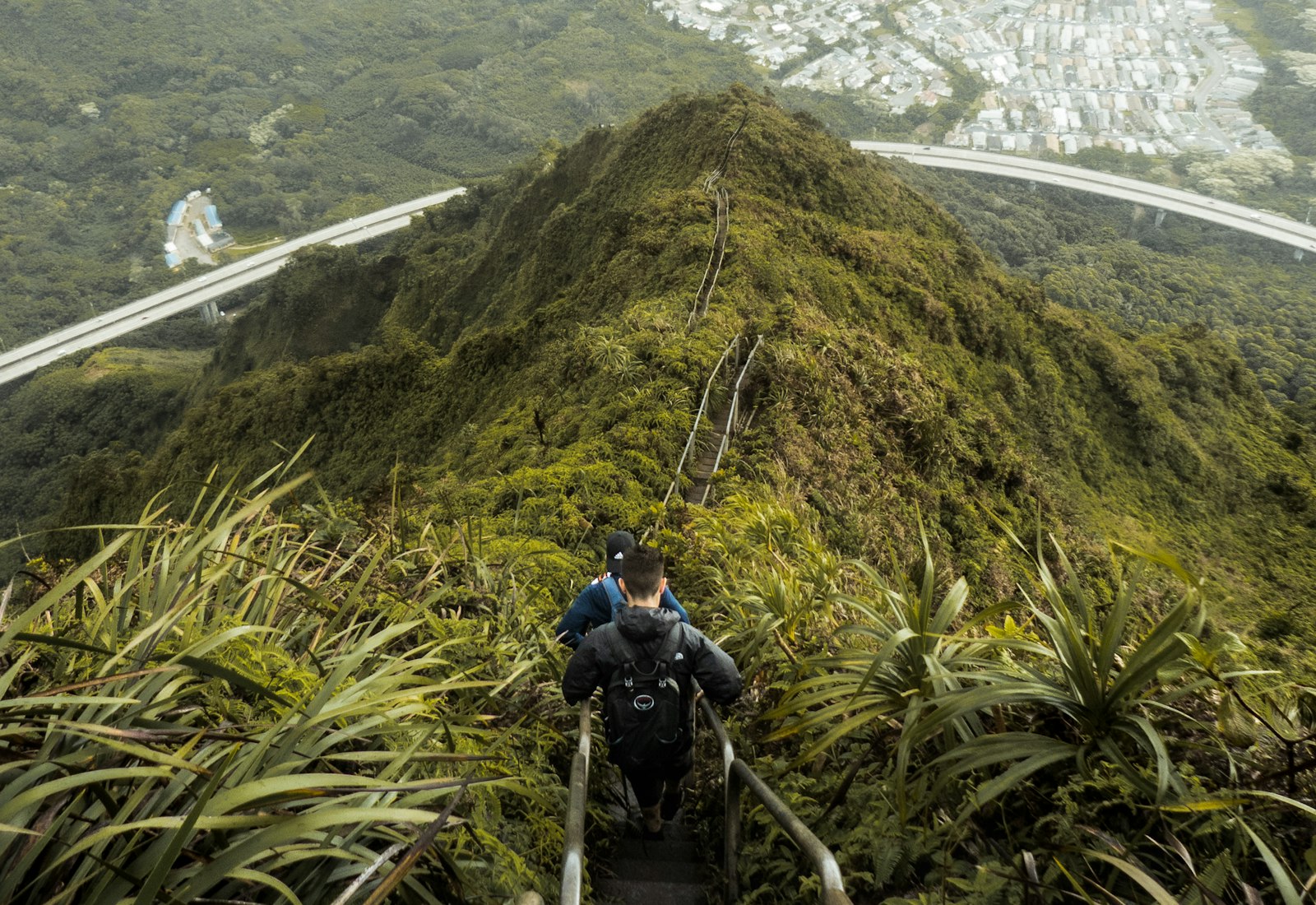
You already know which hike. It's been in your saved photos for a month. What you don't have is a hiking partner who's free Saturday at 6 a.m. and won't text "so sorry" at 5:40.
The trail was never the problem. The second person is, and on Oʻahu there are specific reasons that matters more than it would somewhere flatter.
A few Oʻahu hikes genuinely should not be done alone
This isn't about being tough. It's about what the Koʻolau does to a solo mistake.
The ridges are the clearest case. On a narrow stretch of Olomana, or the notches behind the Pali, or anywhere the trail is a foot wide with a drop on both sides, a rolled ankle stops being an inconvenience and becomes a night out in the wind. Most people who hike here often know someone who's been in a helicopter basket.
Mud is the underrated one. The clay is grippy when dry and something like wet soap after a shower — rain two days ago, three valleys over, is enough. Alone, a slide on a steep section means you self-rescue with whatever you can grab.
Then signal. Deep in Kaʻau Crater, in the back of Moanalua Valley, under canopy on the Mānoa valley floor, your phone is a camera and a flashlight and nothing else. Assume you can't call from the part of the hike where you'd most want to.
None of that argues for staying home. It argues for a second person.
A hiking partner can want a completely different day out
The trailhead is the worst possible place to discover you wanted different days out.
One of you pictured a moving meditation with coffee after. The other pictured a training effort with a time. Both are fine; together, unprepared, they make four strained hours where one person is apologising and the other is pretending not to wait.
So trade real numbers beforehand. "I'm pretty active" means nothing. "I do Kuliʻouʻou in about two and a half hours round trip, I stop a lot, and I don't do exposed scrambling" is a sentence a stranger can match against themselves. If they can't answer in the same form, that's information too.
Say what you won't do, as well — ropes, exposure, going on in the rain. In a dark parking lot that sounds like backing out. In a message on Wednesday it's just planning.
And be honest about the early start. Most of the sunrise hikes worth doing on Oʻahu mean leaving town in the dark, and a partner who agreed at 9 p.m. Friday is a different person at 4:45 a.m. Saturday.
What to ask a stranger before you get in a car with them
Ask these in a message, not at the trail:
- How long does this take you, actually? Their number against the posted one tells you their pace.
- How steep and how exposed does it get? If they can't describe the exposure on a trail they say they've done, they haven't done it recently.
- What's our turn-around time? Agree a clock time, not a place: if we're not at the top by ten, we come down anyway. People get in trouble by pushing on because they were nearly there.
- Who else is coming? Two people you haven't met is a different afternoon than one. Not worse — but you should know before you're in the back seat.
- What if it rains on us? Afternoon showers over the Koʻolau are normal, and a partner who has already thought about the wet-clay descent is one worth keeping. If it closes in properly, there are better things to do with an Oʻahu rain day than pushing a ridge.
One more that isn't about the trail: meet somewhere public first, or at least drive separately. The rules for meeting anyone new apply here — they just get forgotten because a hike feels wholesome.
Don't get talked onto a trail you already decided against
The most Oʻahu-specific risk of hiking with someone new is social, not physical.
Some trails here are closed, some cross private land, and on some the approach itself is trespassing — Haʻikū Stairs and the back routes to it are the ones people still ask about, Sacred Falls is another. People post them anyway, and eventually you'll be at a junction with someone confident who says everybody does it. Closed here means closed: citations get written, and a rescue off a trail you had no business being on is a bad day for you, for the neighbours whose street the trucks fill, and for the crew that comes to get you. Decide before you leave the house, because you won't out-argue a confident stranger at 6 a.m. on four hours' sleep. "I don't do the closed ones" is a complete sentence.
Check the practical details yourself on the state's trail listings: gates that close in the evening, small lots that fill early and spill onto residential streets where you're a guest, a trailhead that wants a reservation booked ahead.
Text a third person, then text them again
Text a third person the trail name, who you're with, and when you expect to be back — then text them when you're down. The second message is the one everybody forgets, and the one that decides whether anybody starts making calls at nine at night.
Once you have the person, the rest is easy. Make the first hike a short, well-travelled, boring one — Makapuʻu, a lower valley trail, something wide with other people on it. You're not testing the trail; you're finding out whether you like walking uphill with each other.
The scarce thing is a 6 a.m. yes from somebody who actually turns up. On YKnot, members post the hike they're doing with pace, distance and start time on it, and room for one more. You ask, the host decides. ID verification is required to be on there at all, and the trailhead comes through once you're in.
See what's happening on Oahu →
Cover photo by Tyler Lastovich on Unsplash.