
Things To Do
Board game nights in Honolulu are the easiest room to walk into alone
How to find open tabletop play around town, which games work for a first meeting, and why teaching rules beats winning when you are new here.
By YKnot Admin · · 5 min read
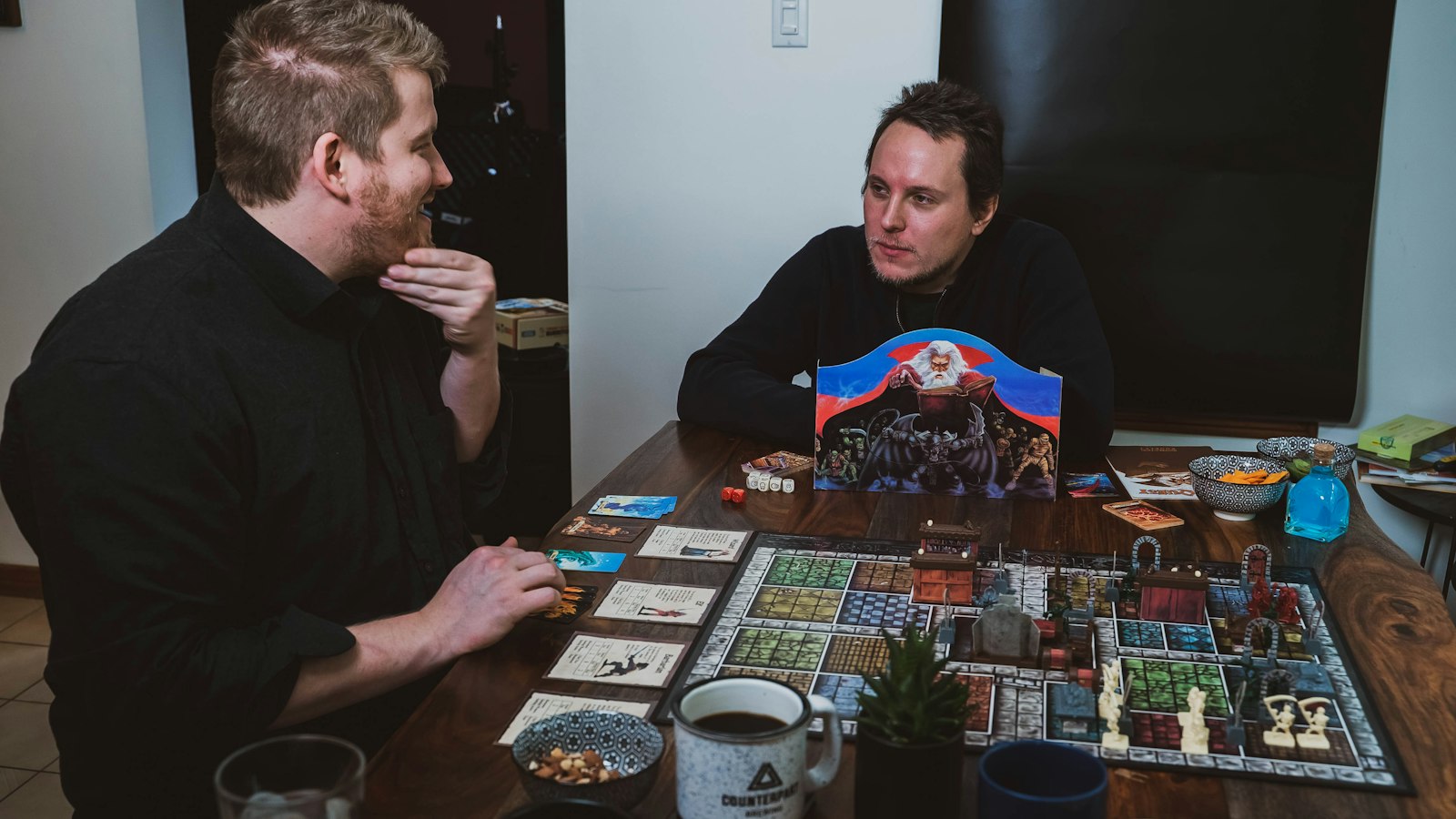
Walking into a bar alone requires a reason to talk to anyone. Board game nights in Honolulu hand you the reason on arrival: there is a table, there are four chairs, somebody is explaining a rulebook, and within ten minutes you are all arguing about whether the blue player is bluffing. For an adult trying to meet people in this town, that is an unusually low-effort format.
That is the whole mechanism. A game gives strangers a script for two hours. You do not have to be interesting, you have to take your turn, and the conversation happens sideways while everyone is looking at the board instead of at each other.
Why a table beats almost every other first meeting
Most ways of meeting people fail because there is nothing to do with the silence. Coffee with someone new is thirty minutes of interview questions. A party is a room where you already need to know somebody. A game removes the problem entirely: the structure is provided, the turns come around, and you are on the same side of a task.
It also stretches time. Two hours at a table is longer than most first conversations, and people relax into it — the fourth round is where somebody mentions they surf, or that they moved here in April, or that they are also looking for a Saturday hiking group.
It works year-round and it works indoors, which matters more here than people admit. When it is pouring sideways in Mānoa and the trails are a mess, a table is the plan that does not get canceled — the same reason a rainy day on Oʻahu sends half the island looking for something that is not the beach.
Where to find board game nights in Honolulu
There is no single calendar for this, so you assemble it yourself.
Start with the game and hobby shops. Stores around town — in Kaimukī and Mōʻiliʻili, out toward Pearl City, and on the Windward side — have long been where this happens, with open play tables and regular evenings for card games, minis, and board games. Which shops are running one this month is the part that moves, so call the shop or check its feed for this week rather than trusting a listing from last year. The staff are the real directory: ask which night is beginner-friendly and which is the serious tournament crowd, because turning up to the wrong one is discouraging for no reason.
Cafés, boba shops, and a few bars host tabletop meetups on a set weeknight. Libraries are worth checking too — branches run community programs, and the Hawaiʻi State Public Library System posts branch events on its site. Near campus, UH Mānoa student clubs have run open sessions during the semester; whether one is meeting this term is worth an email before you drive over.
Then there are the private groups: Discord servers, Meetup listings, and the one that has been playing in somebody's Kakaʻako apartment every other Thursday for six years. Those are the best ones and they are never advertised. You get in by going to a public night and being pleasant.
Bring the right game, not the impressive one
A four-hour strategy epic is a terrible first meeting. It takes forty minutes to teach, it punishes the newcomer for a mistake made in the first ten, and by hour three somebody is quietly losing and no longer talking.
For a table of people who just met, use a co-op or a party game that runs under an hour. Co-ops — Pandemic, Forbidden Island, Horrified, The Crew — put everyone on the same side, so the table talks constantly and nobody goes home beaten. Party and word games like Codenames, Just One, or Wavelength are almost entirely conversation with a scoreboard attached, and they work at six or eight players, which is what you actually get when a group shows up.
Save the heavy games for people you have played with four times. They are better once you know whose bluffing face means nothing.
Be the person who teaches, not the person who wins
This is the part that turns a game night into a social life. Learn one game cold and become the person who teaches it. Read the rules at home, play a round solo, and be able to explain it in five minutes flat with the pieces in front of you.
Teaching makes you the host of the table without needing to be charming. You talk to everyone, you control the pace, you can pull in the quiet person, and everybody remembers who made it easy to join. Nobody remembers who won.
And do not crush the newcomer. A weak move that keeps somebody in the game trades a win that means nothing for a fourth player who comes back next week. Coming back is the whole point, in the same way that making friends in your 30s here runs on repetition rather than on any single great night out.
Once you have found a table that meets on a fixed weeknight, guard that slot. The standing weekly table is the strongest version of this: the same night, the same people, nobody having to organize anything. Three months in it stops being a game night and becomes the group that texts you about everything else there is to do on Oʻahu.
When the shops near you are quiet, the fix is a table of your own — which is what YKnot is for. A member posts the night they are already having, two chairs open, and other members ask in. Members only, IDs verified, the host picks who joins, and the address goes out after that.